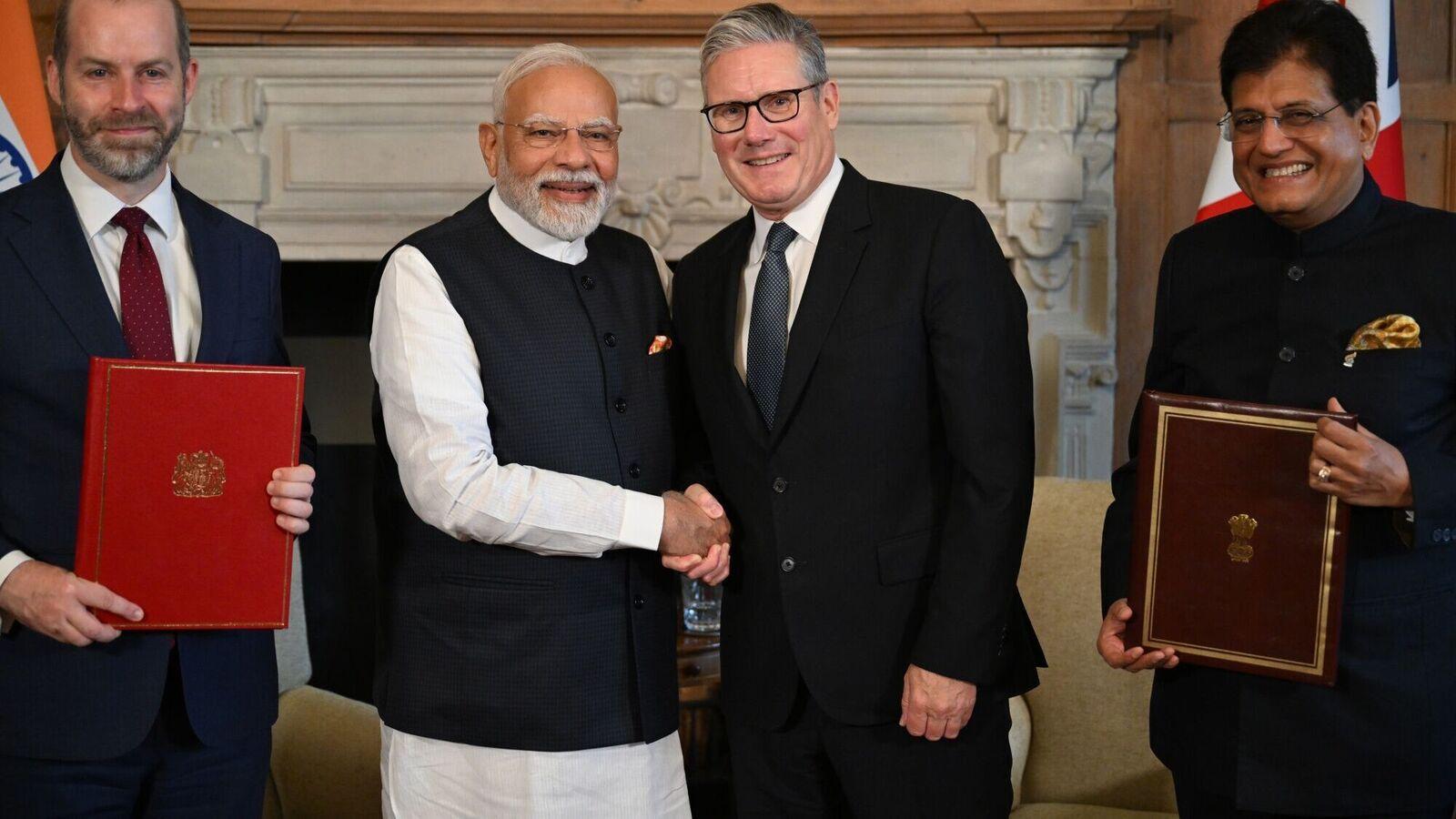
India and the United Kingdom have entered a new phase in their economic partnership as the India–UK Comprehensive Economic and Trade Agreement (CETA) officially came into force on July 15, 2026. The landmark agreement is expected to significantly boost bilateral trade, reduce tariffs on a wide range of goods, and strengthen investment and business cooperation between the two nations.
The agreement provides improved market access for businesses in sectors including automobiles, textiles, pharmaceuticals, food products, engineering goods, financial services, technology, and professional services. By lowering trade barriers, both governments expect increased exports, greater foreign investment, and stronger supply chain collaboration.
Industry leaders in India have welcomed the agreement, saying it is likely to enhance the competitiveness of Indian exporters while encouraging innovation and expanding consumer choices. India’s pharmaceutical and leather industries are among the sectors expected to benefit, with export growth projected over the coming years.
Officials from both countries described the trade pact as one of the most significant bilateral agreements in recent years. Beyond tariff reductions, it includes provisions for investment, digital trade, regulatory cooperation, and mobility for professionals, reinforcing the long-term strategic partnership between India and the UK.
News as Reported.