Germany has launched a nationwide Low Water Information System (NIWIS) to strengthen water management as prolonged drought and climate change continue to reduce water levels in the country’s rivers. The new digital platform brings together data from federal and state agencies, enabling authorities, businesses, and local communities to monitor river conditions in real time and respond more effectively to water shortages.
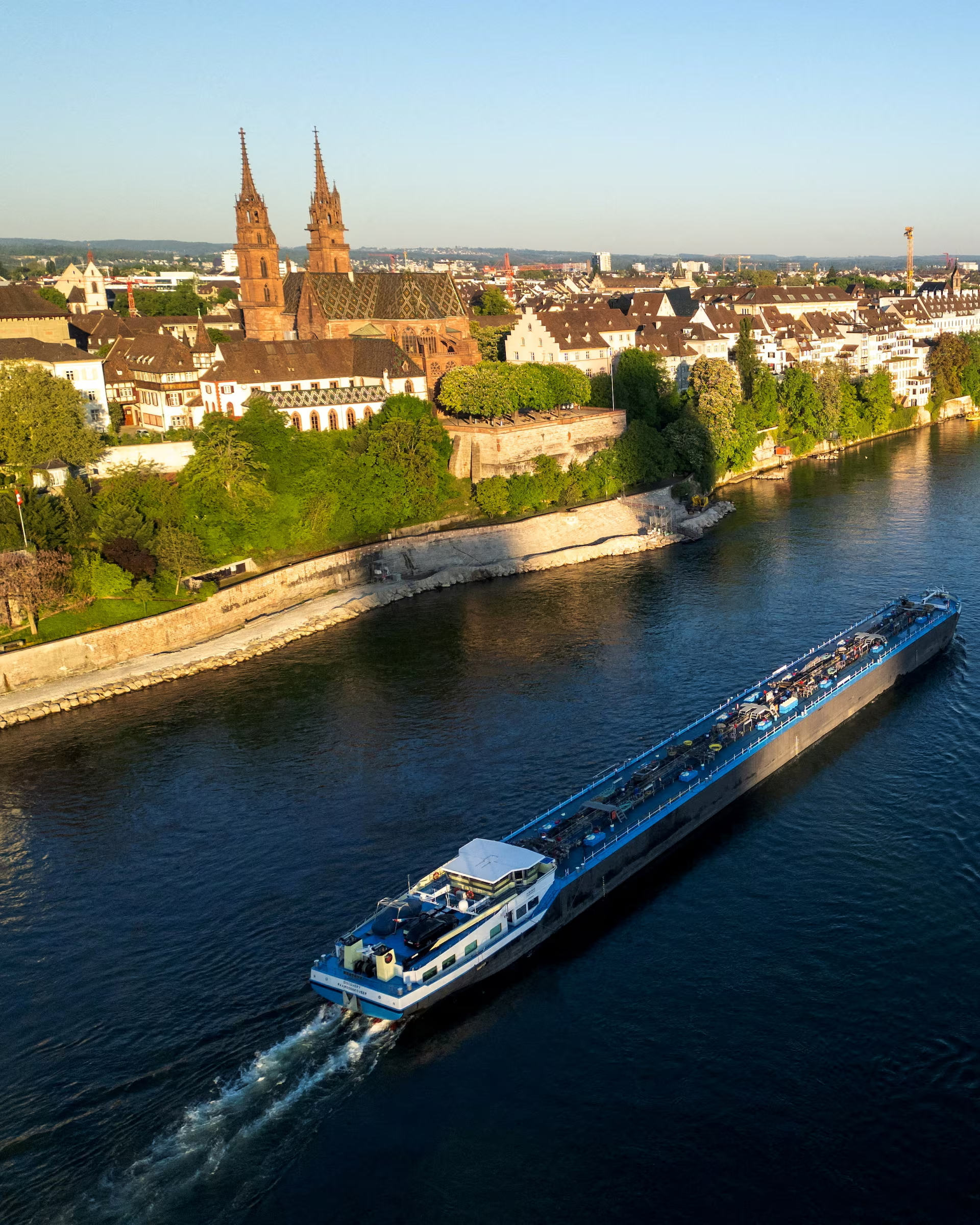
The initiative comes as the Rhine River, one of Europe’s busiest commercial waterways, faces critically low water levels after weeks of hot, dry weather. Shallow waters have forced cargo vessels to carry much lighter loads, increasing transport costs and disrupting the movement of raw materials, fuel, chemicals, and industrial goods across Germany. Major steel producer Thyssenkrupp has already reduced blast furnace production and suspended its own barge operations due to supply constraints.
German Environment Minister Carsten Schneider warned that the country has lost an estimated 60 billion cubic metres of water over the past 25 years because of climate change. Studies suggest that, without stronger water management measures, water scarcity could cost Germany up to €625 billion by 2050 through impacts on industry, agriculture, and infrastructure.
Officials say NIWIS will improve drought preparedness by providing timely information for industries, shipping companies, farmers, and emergency planners. The system is expected to support long-term climate adaptation efforts while helping safeguard Germany’s economy and freshwater resources as extreme weather events become more frequent.
News as reported