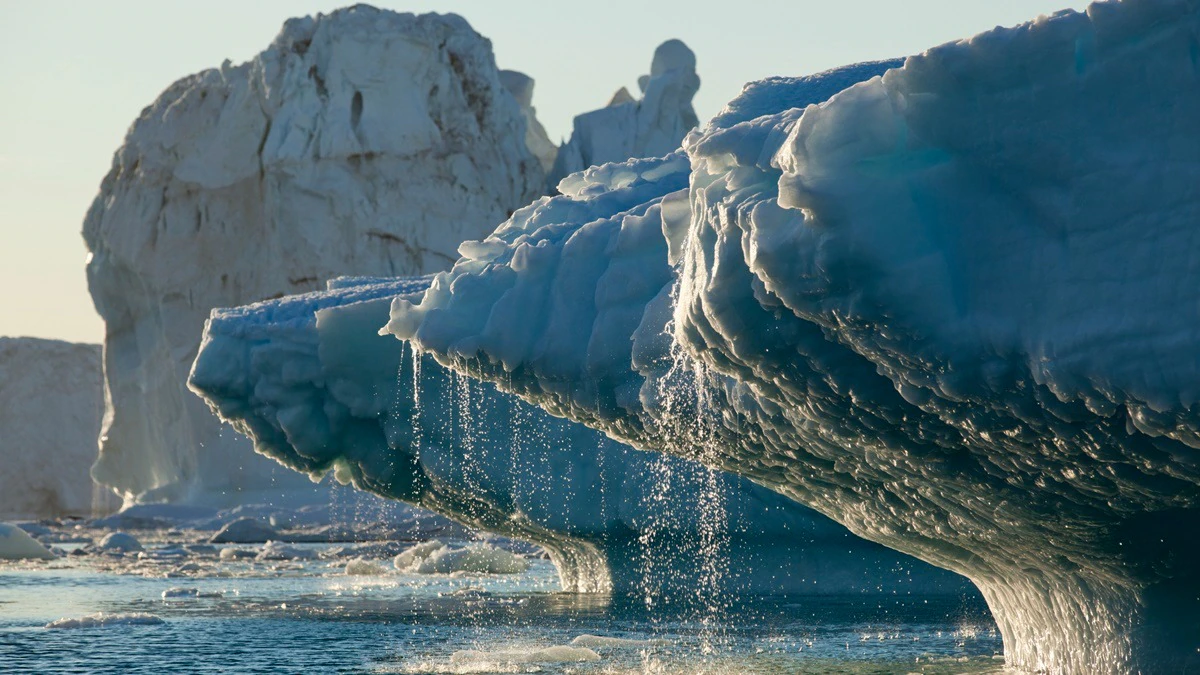
An international team of around 80 scientists and crew has embarked on a major research expedition to Greenland to investigate how rapidly melting glaciers could reshape the global climate. The five- to six-week mission, conducted aboard the British polar research vessel RRS Sir David Attenborough, is part of the £20 million GIANT (Greenland Ice Sheet to Atlantic Tipping Points) project led by the British Antarctic Survey.
The expedition aims to understand how freshwater released from Greenland’s melting glaciers may affect the Atlantic Meridional Overturning Circulation (AMOC), a crucial ocean current system that regulates weather patterns across Europe and influences global climate. Scientists warn that significant disruption to this circulation could lead to more extreme weather events, changes in rainfall, and shifts in marine ecosystems.
Researchers will deploy advanced technologies, including the autonomous underwater vehicle “Boaty McBoatface,” capable of exploring beneath thick sea ice and glacier fronts at depths of up to 1,500 metres. The mission will collect unprecedented data on glacier movement, ocean temperatures, and meltwater flows, helping scientists improve climate prediction models and develop early-warning systems for potential glacier collapse.
The expedition comes after record-breaking heatwaves across the United Kingdom and Western Europe highlighted the growing impacts of climate change. Experts believe the findings will play a vital role in understanding future sea-level rise and guiding international efforts to strengthen climate resilience and protect vulnerable coastal communities.
News as reported