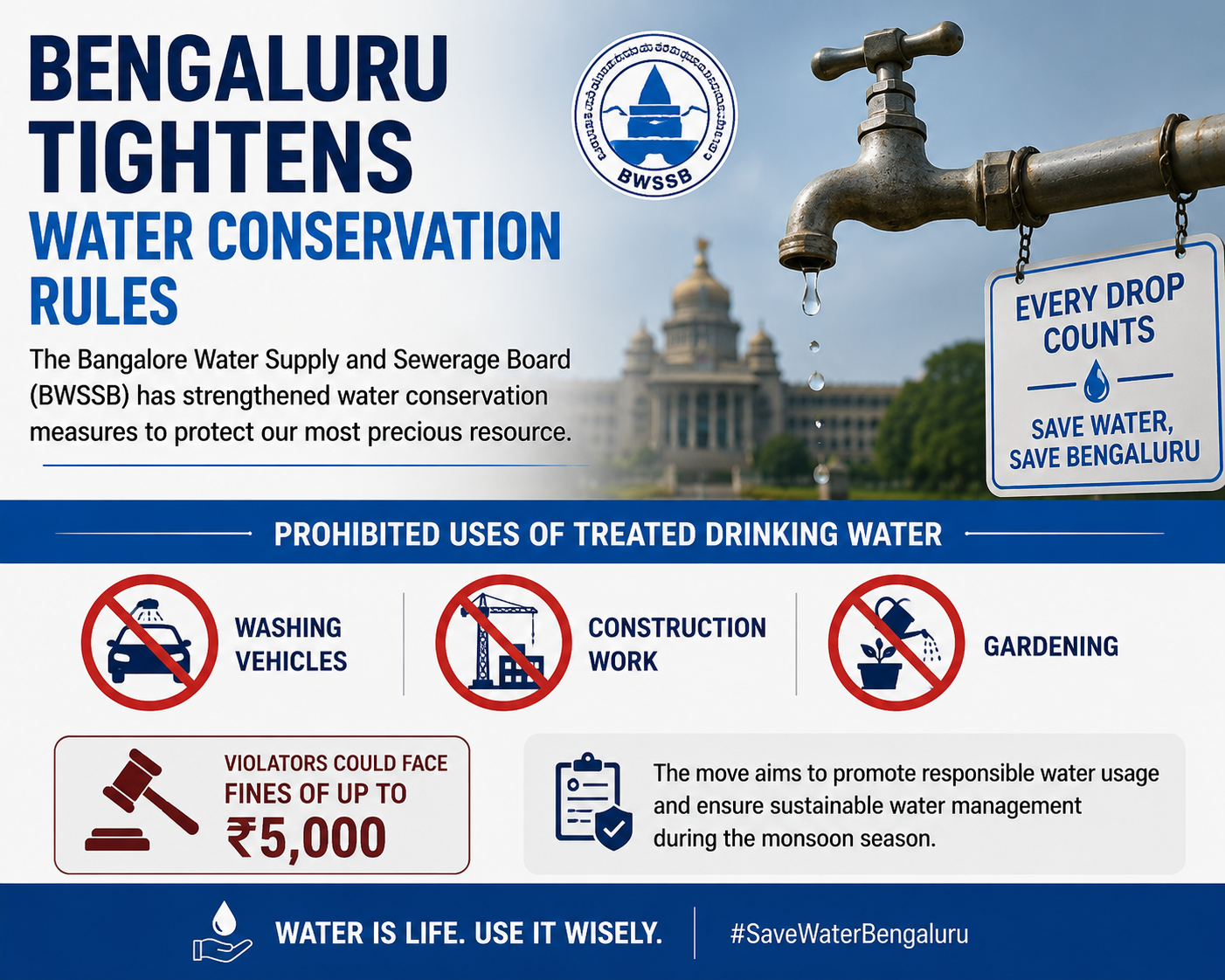
The Bangalore Water Supply and Sewerage Board (BWSSB) has announced a series of stringent water conservation measures aimed at protecting the city’s drinking water supply amid concerns over rainfall variability and rising demand. The new directives prohibit the use of potable water for several non-essential activities and encourage residents and businesses to adopt more sustainable water management practices.
Under the revised rules, the use of treated drinking water for washing vehicles, watering gardens, cleaning roads and footpaths, construction activities, and filling swimming pools has been banned. Instead, the Board has instructed individuals, commercial establishments, and institutions to use treated wastewater, borewell water, or other approved alternative sources wherever possible. Officials said the measures are intended to ensure that drinking water remains available for essential household needs.
To further reduce water consumption, BWSSB has also made the installation of water-saving aerators (flow restrictors) mandatory in residential buildings, apartments, commercial establishments, hotels, industries, and government offices. According to the Board, these devices can reduce water usage by 30–50% without significantly affecting water flow, making them an effective solution for long-term conservation.
Authorities have warned that violations of the new regulations will attract a ₹5,000 fine, while repeat offenders may face an additional ₹500 daily penalty. In serious or continued cases, BWSSB may also reduce water supply to the premises by up to 50% and initiate legal action under the provisions of the Bangalore Water Supply and Sewerage Act, 1964.
BWSSB officials said the early introduction of these measures reflects growing concerns over the potential impact of El Niño on monsoon rainfall and Bengaluru’s long-term water security. The Board has appealed to citizens to use water responsibly and participate in the city’s conservation efforts, emphasizing that collective action is essential to ensure a reliable drinking water supply for the future.
news as reported