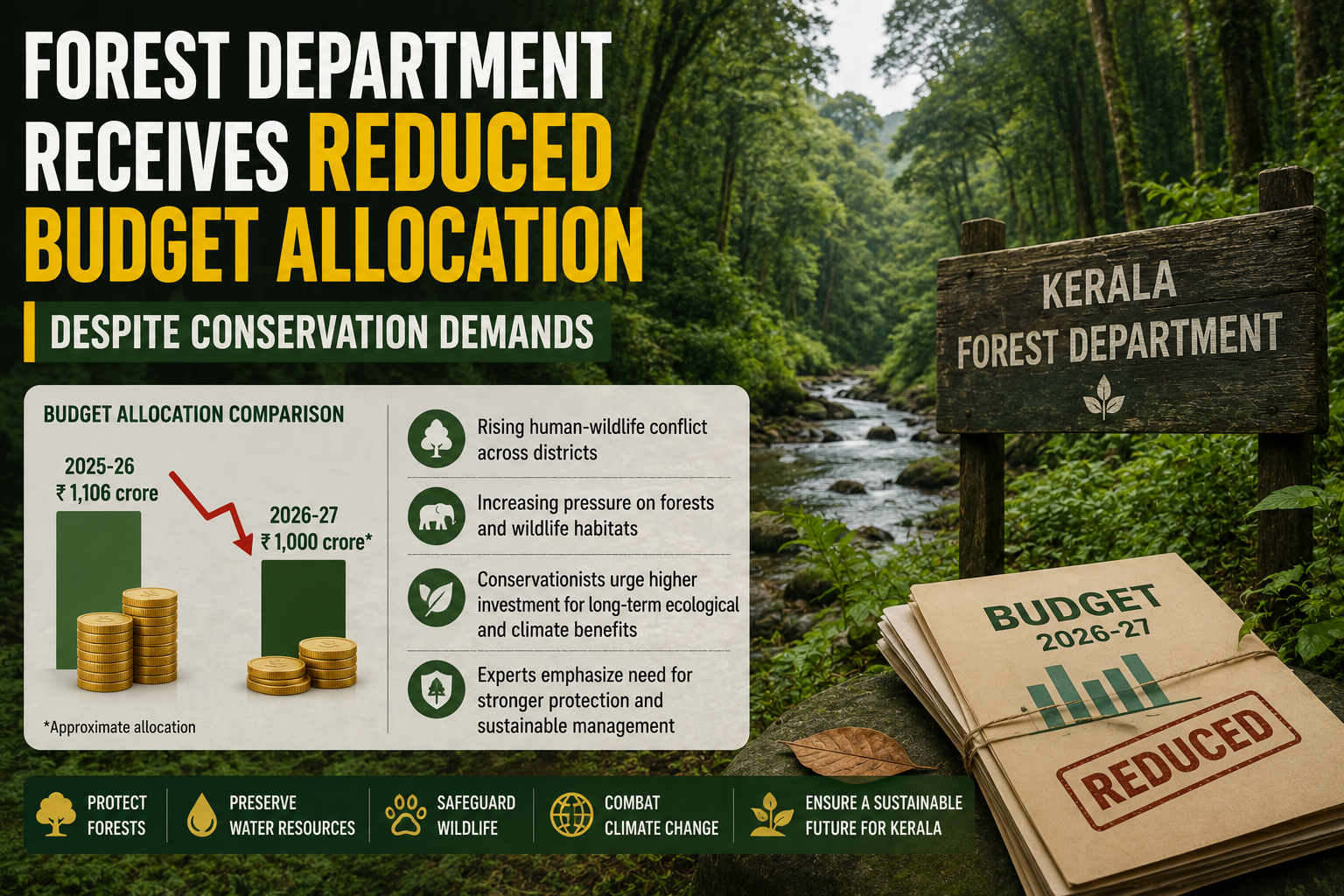
The Kerala Forest Department has received a comparatively lower budget allocation in the 2026–27 State Budget, sparking concerns among environmental experts, conservationists, and wildlife protection groups. The development comes at a time when the state is facing increasing challenges related to climate change, human-wildlife conflict, habitat degradation, and biodiversity conservation.
According to budget documents, while the government has announced major investments in healthcare, infrastructure, maritime development, and technology sectors, the allocation for the Forest Department has not witnessed a corresponding increase. Environmental groups argue that the reduction comes despite growing demands for stronger conservation measures and improved forest management across Kerala.
Kerala is home to some of India’s most ecologically sensitive regions, including the Western Ghats, which is recognized as a UNESCO World Heritage Site. The state’s forests play a vital role in maintaining biodiversity, regulating water resources, supporting tourism, and mitigating the effects of climate change. Experts note that protecting these ecosystems requires continuous investment in conservation programs, anti-poaching operations, habitat restoration, and scientific research.
Wildlife conservation organizations have pointed out that incidents involving human-wildlife conflict have increased in several districts over the past few years. Encounters involving elephants, wild boars, leopards, and other animals have raised concerns among local communities. Conservationists believe additional funding is necessary to implement long-term solutions, including wildlife corridors, early-warning systems, and improved monitoring infrastructure.
Government officials have responded by stating that environmental protection remains a priority and that several conservation initiatives will continue through existing schemes and centrally funded projects. They emphasized that budget allocations alone do not reflect the total resources available for forest and wildlife management.
Environmental experts, however, have urged policymakers to reconsider future allocations, arguing that investments in forests generate long-term ecological and economic benefits. Healthy forests contribute to water security, climate resilience, carbon sequestration, and sustainable livelihoods for thousands of people.
The debate surrounding the allocation has renewed discussions about balancing development priorities with environmental conservation. As Kerala continues to address the impacts of climate change and ecological pressures, many conservation advocates believe that stronger financial support for forest protection will be essential to safeguarding the state’s natural heritage for future generations.