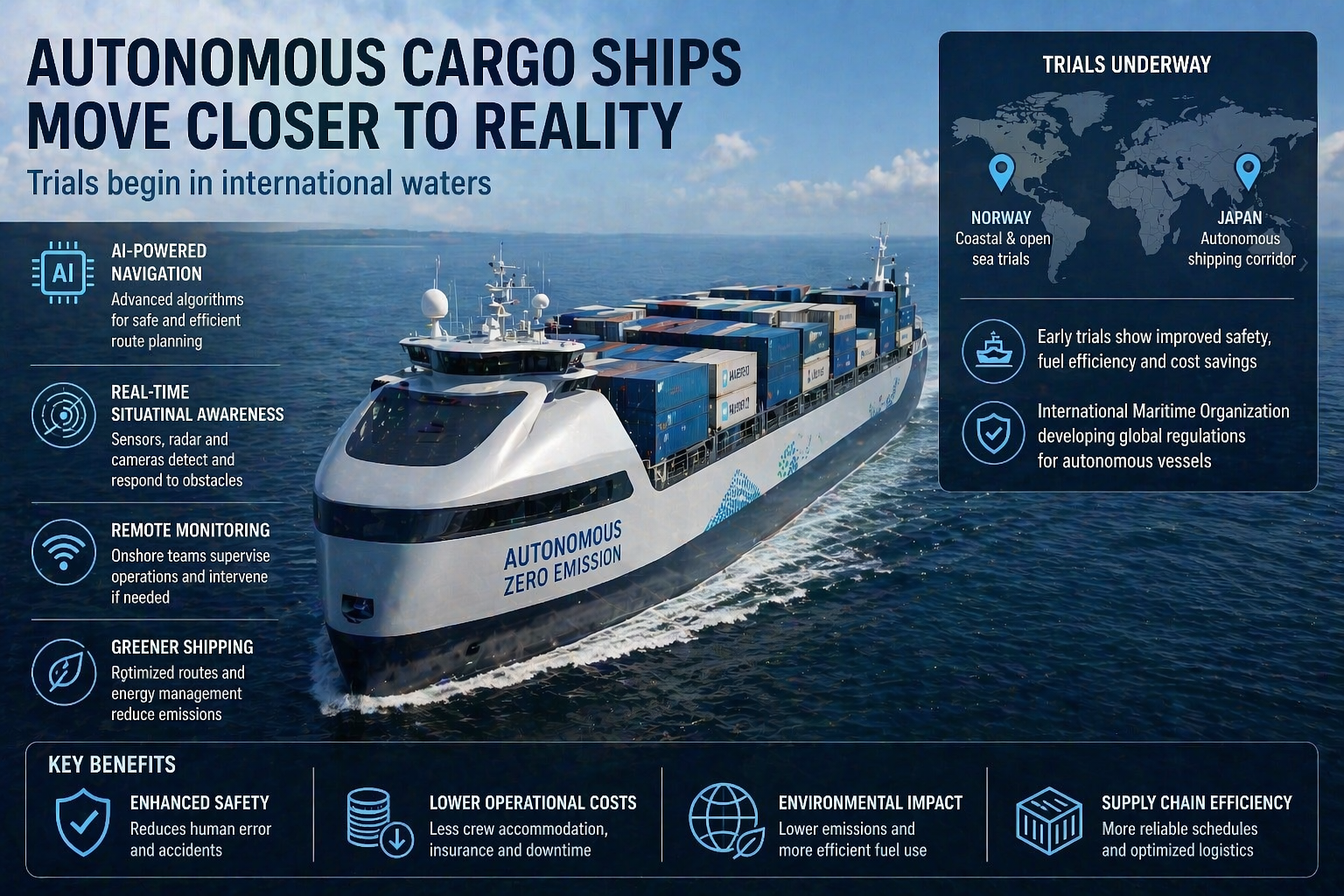
Autonomous cargo ships are taking a major step toward commercial reality as large-scale trials begin in international waters, signaling a potential transformation in global shipping and logistics.
Several maritime technology companies, in collaboration with shipping giants, have launched pilot programs to test fully and semi-autonomous vessels equipped with advanced navigation systems, artificial intelligence, and real-time data monitoring. These ships are designed to operate with minimal or no human intervention, using sensors, radar, and satellite connectivity to navigate busy sea routes safely.
Countries including Norway and Japan are at the forefront of this innovation, investing heavily in smart shipping infrastructure and regulatory frameworks. Early trials have shown promising results, with autonomous systems successfully handling route optimization, collision avoidance, and fuel efficiency improvements.
Industry experts say the adoption of autonomous cargo ships could significantly reduce operational costs, enhance safety by minimizing human error, and lower carbon emissions through optimized sailing patterns. However, challenges remain, including cybersecurity risks, legal accountability in case of accidents, and the need for international maritime regulations to keep pace with rapidly evolving technology.
Organizations such as the International Maritime Organization are actively working on guidelines to ensure safe and standardized deployment of autonomous vessels worldwide.
While full-scale adoption may still take several years, the current trials mark a crucial turning point. As technology matures and regulations evolve, autonomous shipping could soon become a defining feature of the future global trade network. News as Reported.