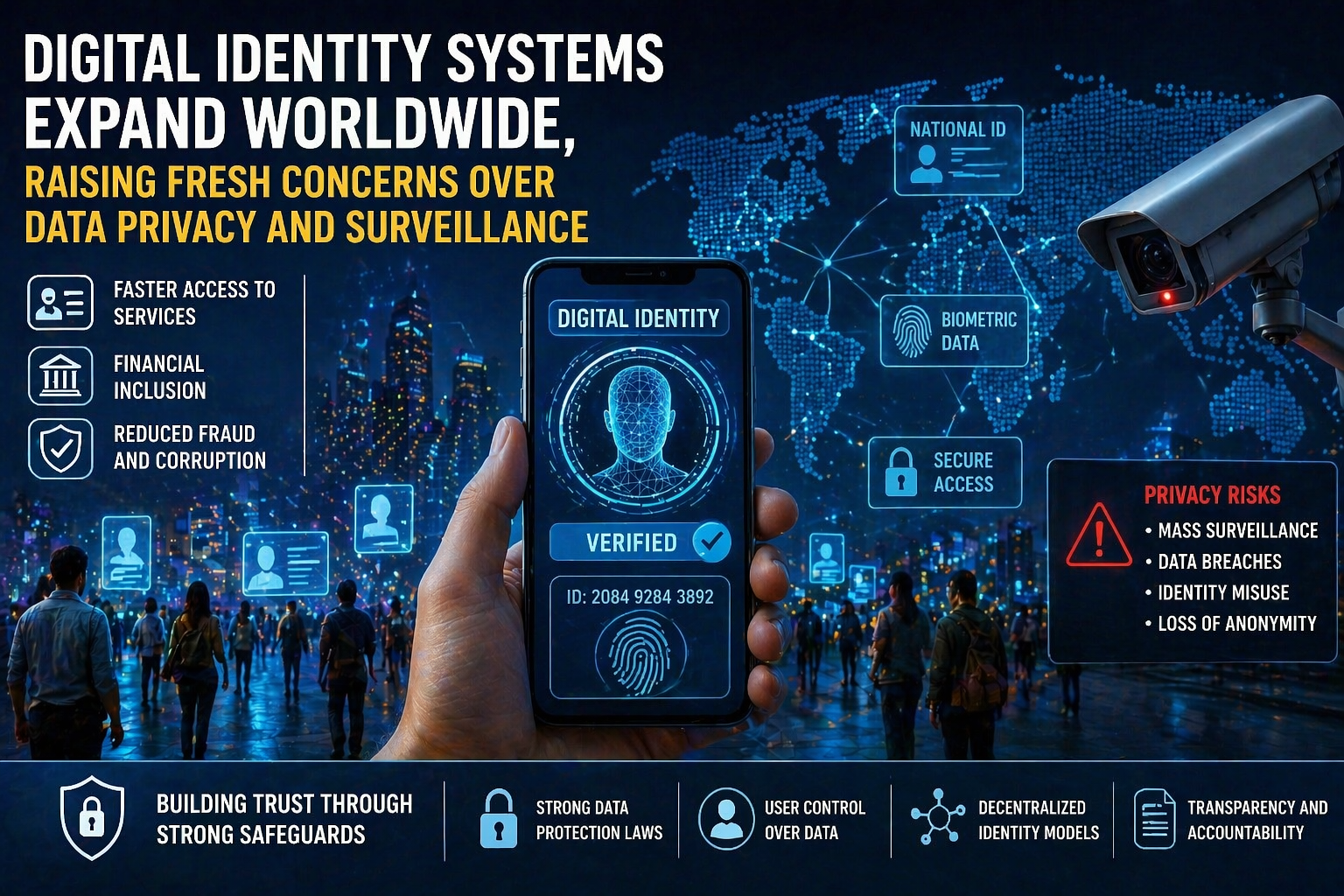
Digital identity systems are rapidly expanding across the globe as governments and institutions seek more efficient ways to deliver public services, verify citizens, and strengthen financial inclusion. However, the growing adoption is also raising serious concerns about data privacy, surveillance, and individual rights.
Countries such as India have already implemented large-scale digital ID frameworks like Aadhaar, enabling millions to access banking, healthcare, and welfare services. Similar initiatives are being rolled out in parts of Africa, Southeast Asia, and Europe, often supported by international organizations like the World Bank to improve administrative efficiency and reduce fraud.
Despite these benefits, privacy advocates warn that centralized identity databases could expose sensitive personal data to misuse, cyberattacks, or unauthorized surveillance. Concerns are growing over how governments and private companies collect, store, and share biometric and personal information, especially in countries with limited data protection laws.
Experts highlight that without robust safeguards, digital ID systems could enable mass tracking of individuals’ activities, potentially infringing on civil liberties. The debate has intensified as artificial intelligence and data analytics tools become more integrated into identity verification processes.
In response, policymakers are working to introduce stricter data protection regulations and decentralized identity models that give users greater control over their information. Technologies such as blockchain-based identity systems are also being explored as potential solutions to enhance security and transparency.
As digital identity systems continue to expand, balancing technological innovation with privacy protection remains a critical global challenge. Governments now face increasing pressure to ensure that convenience and security do not come at the cost of fundamental rights. News as Reported.