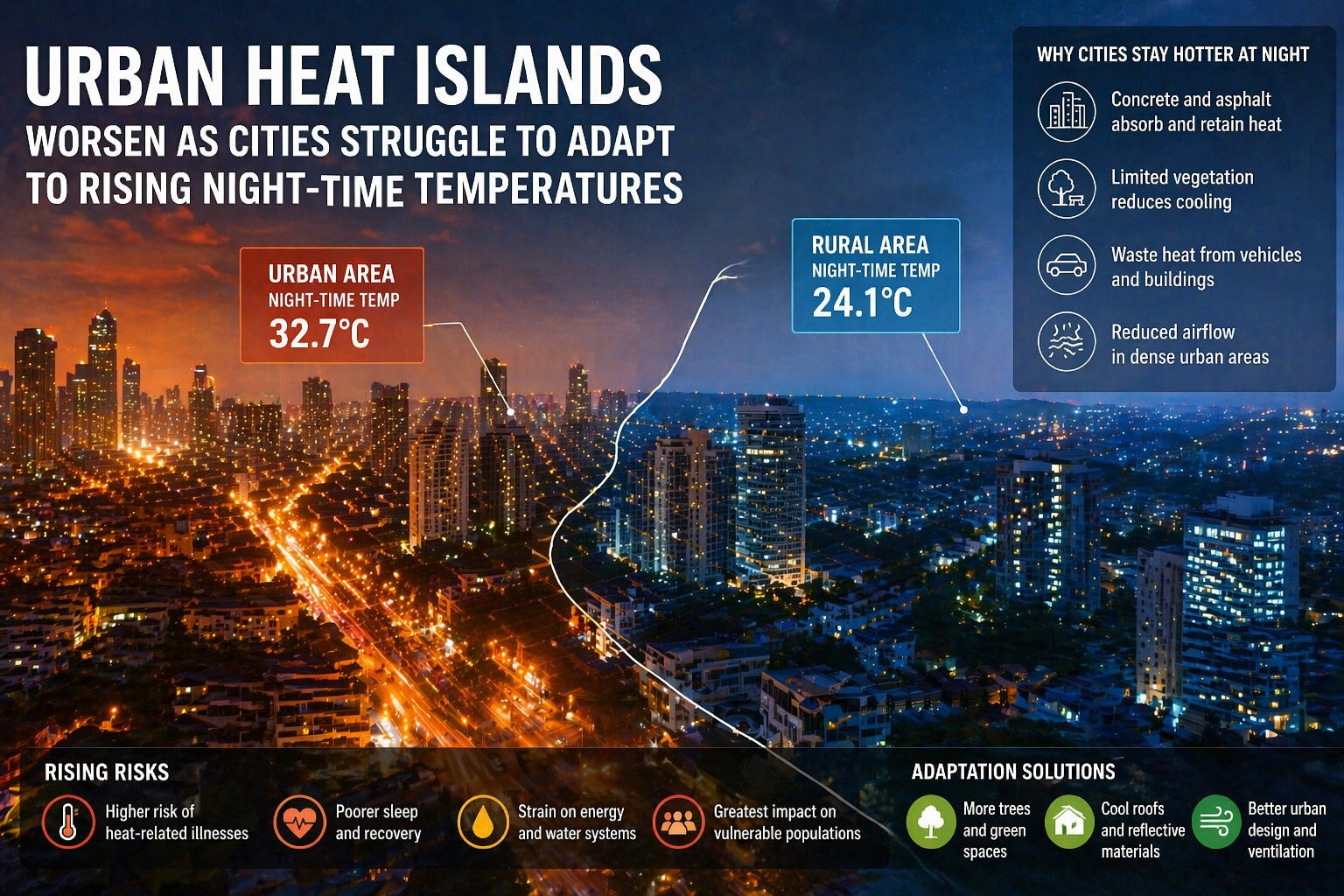
Cities around the world are facing intensifying heat stress as urban heat island effects drive a sharp rise in night-time temperatures, posing serious risks to public health and infrastructure.
Recent climate observations show that densely built urban areas are retaining more heat after sunset due to concrete structures, asphalt roads, and limited green cover. Unlike rural regions, cities are struggling to cool down overnight, leaving residents exposed to prolonged periods of heat with little relief.
Experts warn that higher night-time temperatures are particularly dangerous because they prevent the human body from recovering after extreme daytime heat. This has led to an increase in heat-related illnesses, especially among vulnerable populations such as the elderly and those without access to cooling systems.
Major cities across Asia, Africa, and South America are already reporting record-breaking minimum temperatures. Rapid urbanization, combined with shrinking green spaces and increased energy use, is accelerating the problem.
In response, governments and urban planners are exploring adaptive solutions, including cool roofing materials, expanded tree cover, and reflective road surfaces. Some cities are also redesigning buildings to improve airflow and reduce heat absorption.
Climate scientists emphasize that without urgent intervention, urban heat islands could significantly worsen living conditions in cities over the coming decades. As global temperatures continue to rise, managing night-time heat is emerging as a critical challenge in climate resilience planning.
News as Reported.