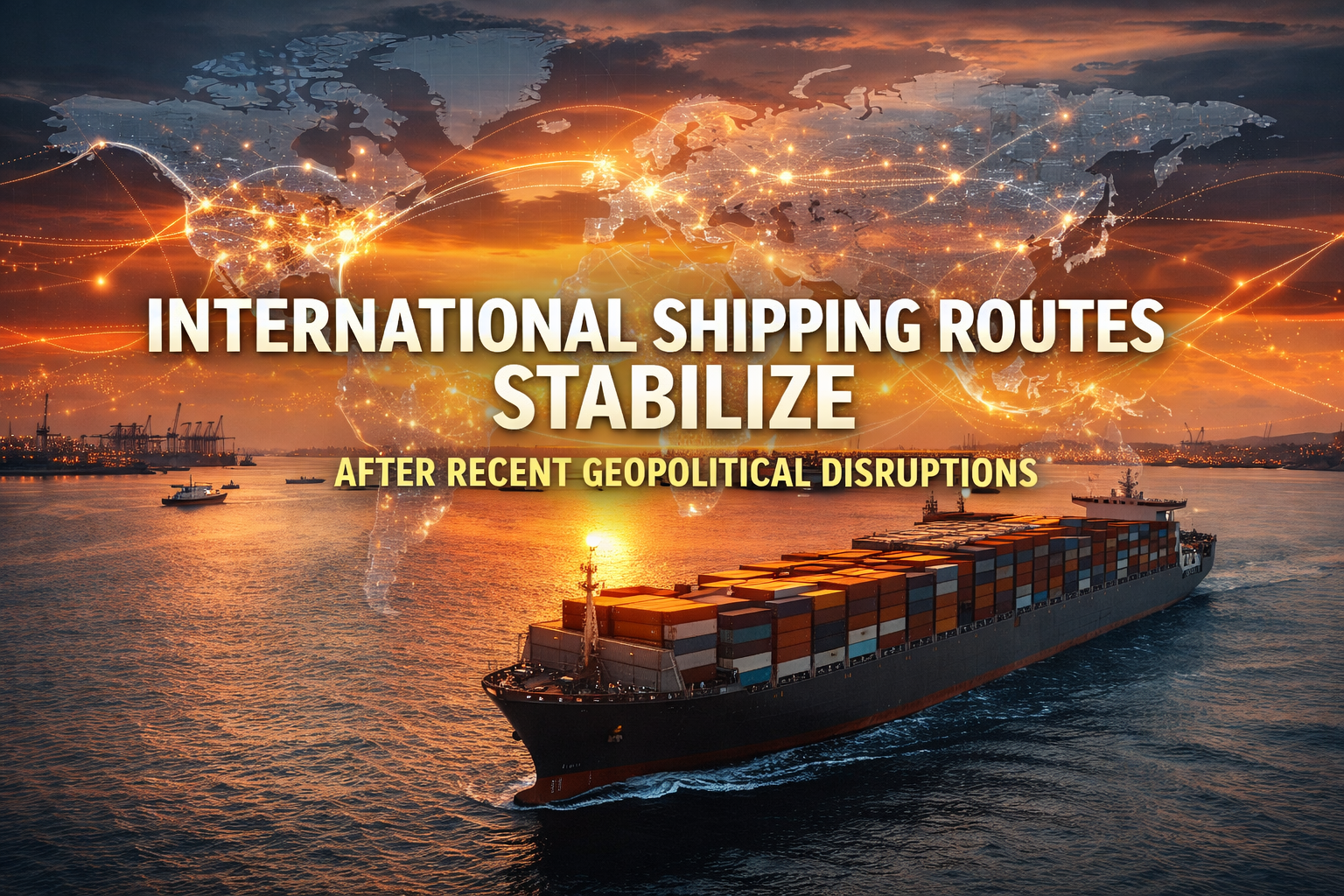
Global shipping routes are showing signs of stabilization following weeks of disruption caused by heightened geopolitical tensions in key maritime corridors. The easing of risks in critical transit zones has allowed cargo movement to gradually return to normal, offering relief to global supply chains and international trade.
One of the most significant developments has been the improved security situation around the Strait of Hormuz, a vital passage for global oil shipments. Recent diplomatic efforts and coordinated naval monitoring have reduced immediate threats, enabling tankers and cargo vessels to resume operations with fewer delays.
Similarly, traffic through the Suez Canal has normalized after precautionary rerouting by several shipping companies during the peak of tensions. The return of vessels to these primary routes is expected to reduce transit times and operational costs, which had surged due to longer alternative routes.
Shipping industry leaders report that freight rates, which spiked during the disruption period, are beginning to ease. Analysts note that the stabilization of maritime routes is also helping to bring down insurance premiums for cargo shipments, which had increased sharply due to perceived risks.
Global trade organizations, including the International Maritime Organization, have welcomed the development while emphasizing the need for continued vigilance. They are urging nations to maintain open communication channels and strengthen maritime security frameworks to prevent future disruptions. News as Reported.