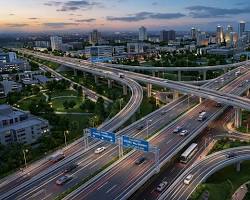
The central government has officially intensified its nationwide infrastructure push, announcing a massive acceleration of highway and connectivity projects aimed at bolstering logistics and economic growth. The Ministry of Road Transport and Highways (MoRTH) confirmed today that the National Highways Authority of India (NHAI) has already surpassed its construction targets for the recently concluded financial year by 15%, building 5,313 km of highways against a planned 4,640 km.
The 2026 infrastructure roadmap focuses on three primary pillars: Speed, Sustainability, and Safety. The Union Budget 2026-27 has allocated a record ₹12.2 lakh crore for capital expenditure, with MoRTH receiving ₹3.09 lakh crore to ensure no project stalls due to funding. In a major milestone this week, Prime Minister Narendra Modi inaugurated the Delhi-Dehradun Expressway, slashing travel time from 6 hours to just 2.5 hours. This project features a unique 12-km elevated wildlife corridor to protect local ecology. Furthermore, the government is fast-tracking the development of “City Economic Regions” (CERs) in Tier-II and Tier-III cities, ensuring that highway networks connect directly to industrial hubs to reduce transportation costs.
To maintain this momentum, the government has introduced several policy shifts, including a new Cost Escalation Relief mechanism launched in April 2026. This provides monthly payments to contractors to mitigate rising material costs for cement, steel, and bitumen. Additionally, an Infrastructure Risk Fund has been established to reduce risks for private investors during the high-stakes construction phase, while 20 new National Waterways are being integrated with existing highway corridors to create a “seamless logistics grid.”
Regional development remains a priority, with Uttarakhand seeing a pipeline of projects worth ₹80,000 crore to boost tourism and industrial access. In the south, massive upgrades to the Karimnagar-Warangal section and the Hyderabad-Bengaluru high-speed corridor are now being fast-tracked. Meanwhile, in the North-East, focus remains on the Bac Kan–Cao Bang Expressway to strengthen border connectivity and regional trade. News as Reported.