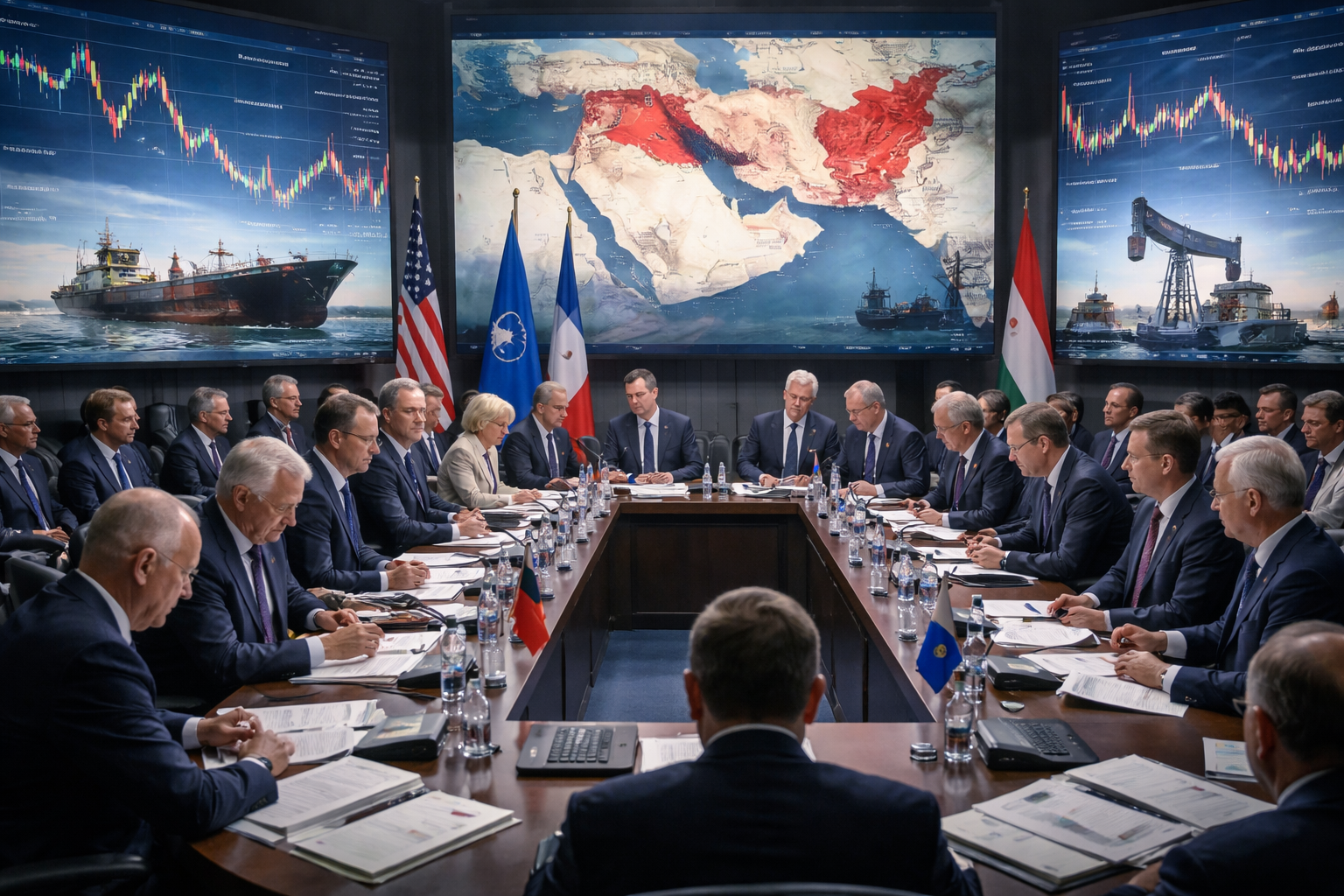
Global financial leaders and institutions are raising serious concerns over mounting economic risks as geopolitical conflicts—particularly in the Middle East—continue to disrupt markets, trade, and financial stability.
The International Monetary Fund (IMF) has warned that escalating conflict involving Iran is significantly straining the global economy. Rising energy and food prices, coupled with tighter financial conditions, are increasing borrowing costs for governments and slowing economic growth. According to recent projections, global public debt could approach 100% of GDP by 2029, a level not seen since the aftermath of World War II.
Financial leaders highlight that these pressures are forcing governments into difficult fiscal trade-offs, particularly in developing economies already facing fragile public finances. The IMF has urged countries to adopt targeted spending strategies instead of broad borrowing to avoid destabilizing markets.
At the same time, the global growth outlook has weakened. The IMF estimates global growth may slow to around 3.1% in 2026, down from earlier expectations, as geopolitical tensions disrupt supply chains and energy markets.
Major banking institutions are also expressing caution. While leading global banks have reported strong trading revenues amid market volatility, executives warn that prolonged geopolitical instability could dampen investment activity, delay major deals, and increase the risk of stagflation driven by high energy prices.
Business leaders echo these concerns, noting that the conflict is undermining global confidence. Volatility in oil, metals, and essential commodities is increasing operational costs for industries worldwide, with many companies preparing to pass these costs on to consumers.
Economists further point to disruptions in key global supply routes—such as energy shipments through the Strait of Hormuz—as a major risk factor. These disruptions have already triggered sharp increases in oil prices and contributed to inflationary pressures across multiple economies. News as Reported.