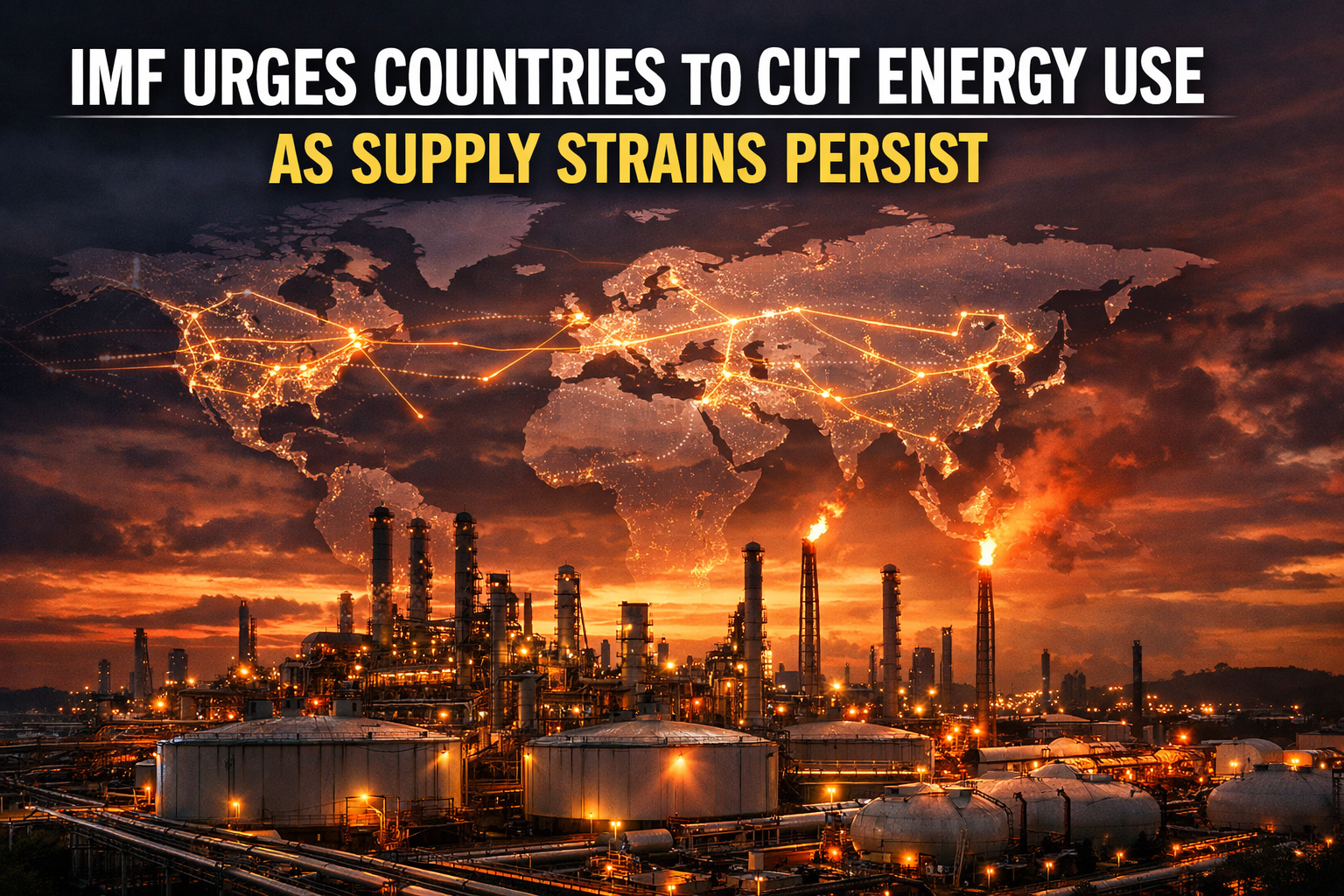
The International Monetary Fund (IMF) has urged countries worldwide to reduce energy consumption as ongoing supply disruptions continue to strain global markets, raising concerns over economic stability and inflation.
According to recent IMF assessments, the current crisis—largely driven by geopolitical tensions and disruptions in key energy supply routes—has significantly tightened global fuel availability. The situation has been worsened by rising oil prices and supply chain bottlenecks, particularly affecting energy-importing nations.
IMF Managing Director Kristalina Georgieva emphasized that maintaining high energy prices may be necessary to curb demand and prevent further shortages. The organization advised governments to avoid broad fuel subsidies, warning that such measures could distort markets and worsen global price pressures. Instead, targeted financial support for vulnerable populations has been recommended.
The IMF also called on countries to adopt energy-saving measures, including promoting public transport, remote work, and improved efficiency in industrial consumption. These steps are seen as critical in managing limited supplies while stabilizing economies facing rising inflation and debt levels.
The crisis has been linked to disruptions in major energy transit routes, including the Strait of Hormuz, through which a significant portion of the world’s oil supply passes. Continued instability in these regions could lead to prolonged shortages and further economic slowdown, with global growth projections already being downgraded.
In a joint warning with other global institutions, the IMF also urged nations to avoid hoarding energy supplies or imposing export restrictions, stressing that coordinated global action is essential to ensure fair distribution and prevent a deeper energy crisis. News as Reported.