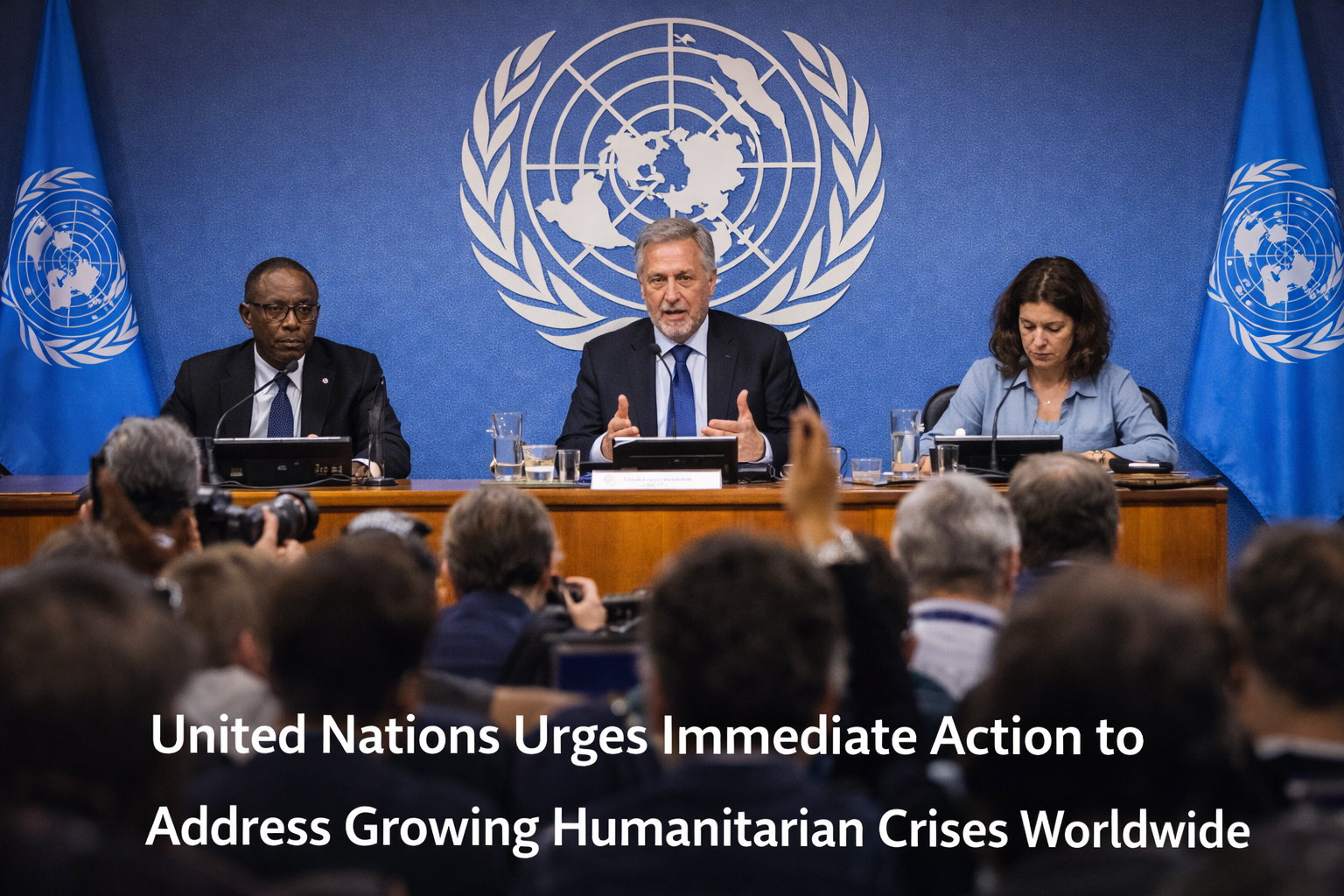
The United Nations has called for urgent and coordinated global action as humanitarian crises intensify across multiple regions, driven by ongoing conflicts, climate-related disasters, and economic instability.
In a recent briefing, senior officials from the United Nations Office for the Coordination of Humanitarian Affairs warned that millions of people are facing acute shortages of food, water, and medical supplies. The agency highlighted that displacement levels have reached record highs, with vulnerable populations in conflict zones and disaster-prone areas bearing the brunt of the crisis.
The World Food Programme emphasized that food insecurity is rapidly worsening, particularly in parts of Africa, the Middle East, and South Asia. Rising inflation, disrupted supply chains, and prolonged drought conditions have significantly reduced access to basic necessities for millions.
Officials also pointed to the increasing frequency of extreme weather events, which are compounding existing humanitarian challenges. Floods, heatwaves, and storms have damaged infrastructure, displaced communities, and strained already limited resources in affected regions.
The United Nations urged governments, international organizations, and donors to step up funding and strengthen collaboration to deliver timely aid. Without immediate intervention, experts warn that the scale and severity of global humanitarian crises could worsen in the coming months, putting millions more lives at risk. News as Reported.