

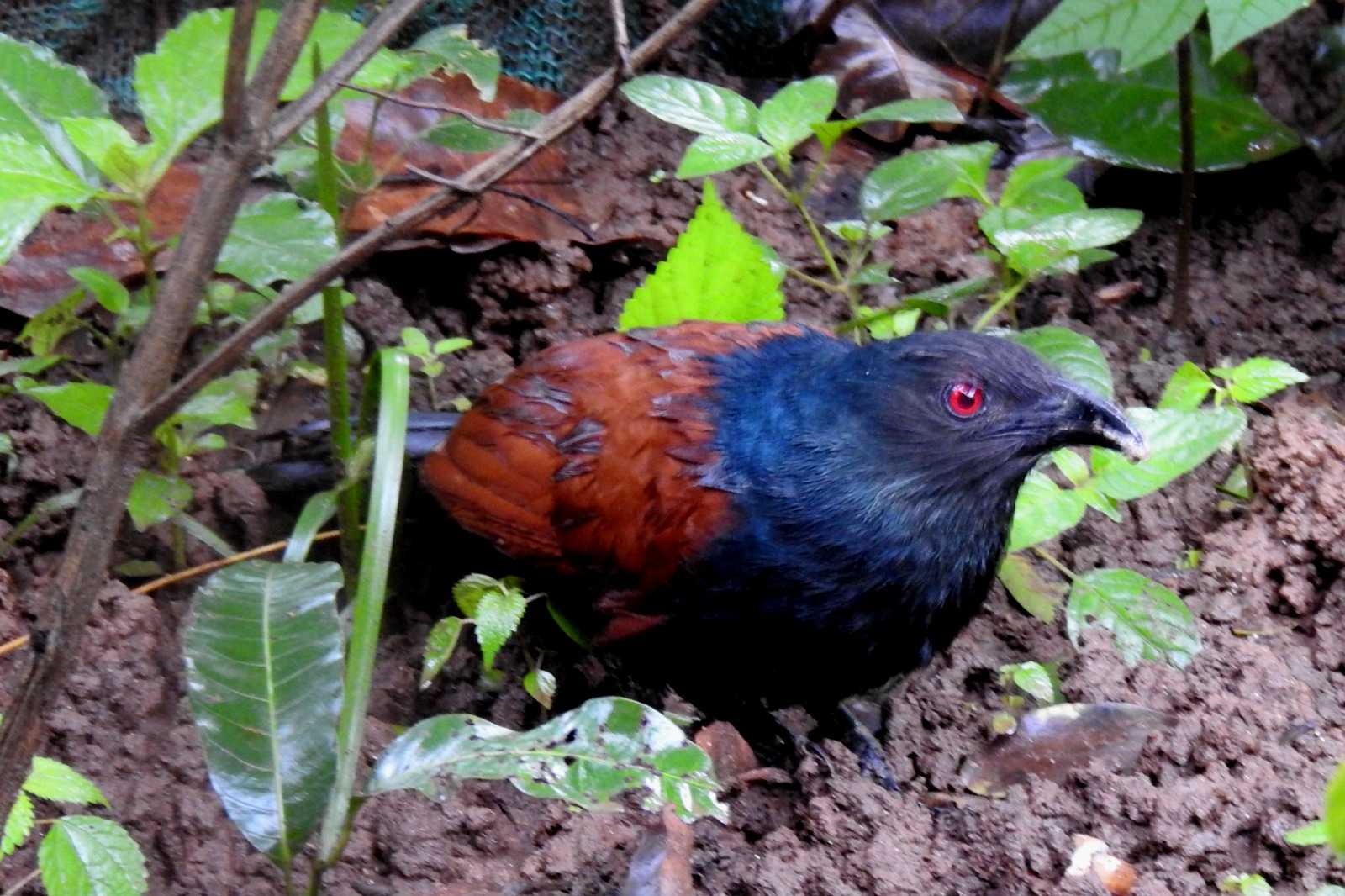
The Greater Coucal, also known as the crow pheasant, stands out among members of the Cuculiformes for its unusual behavior. Unlike many cuckoos that lay eggs in other birds’ nests, this species builds its own nest and takes full responsibility for raising its young.
A notable subspecies, Centropus sinensis parroti, found in southern India and Sri Lanka, was documented in 1913 by Erwin Friedrich Theodor Stresemann. One of its striking features is its eye color, which changes from blue in juveniles to deep red as the bird matures.
Courtship in these birds is equally fascinating. Males pursue females while offering food, and vocal exchanges follow, with females responding in a lower pitch. If receptive, the female signals acceptance by lowering her wings and tail. Once paired, they form strong monogamous bonds, working together to build nests, incubate eggs, and raise their offspring.
However, their nests are sometimes threatened by predators like the Indian Jungle Crow, which may prey on eggs or chicks. Historical studies by Henry Yule and Edgar Thurston also note cultural beliefs linking the bird’s calls to omens, highlighting its unique place in both ecology and tradition.
CONTRIBUTION BY VINCENT MASH —FORMER
EDITOR OF PHOTOWIDE MAGAZINE AND ASSOCIATE EDITOR OF PHOTOTRACKS MAGAZINE
