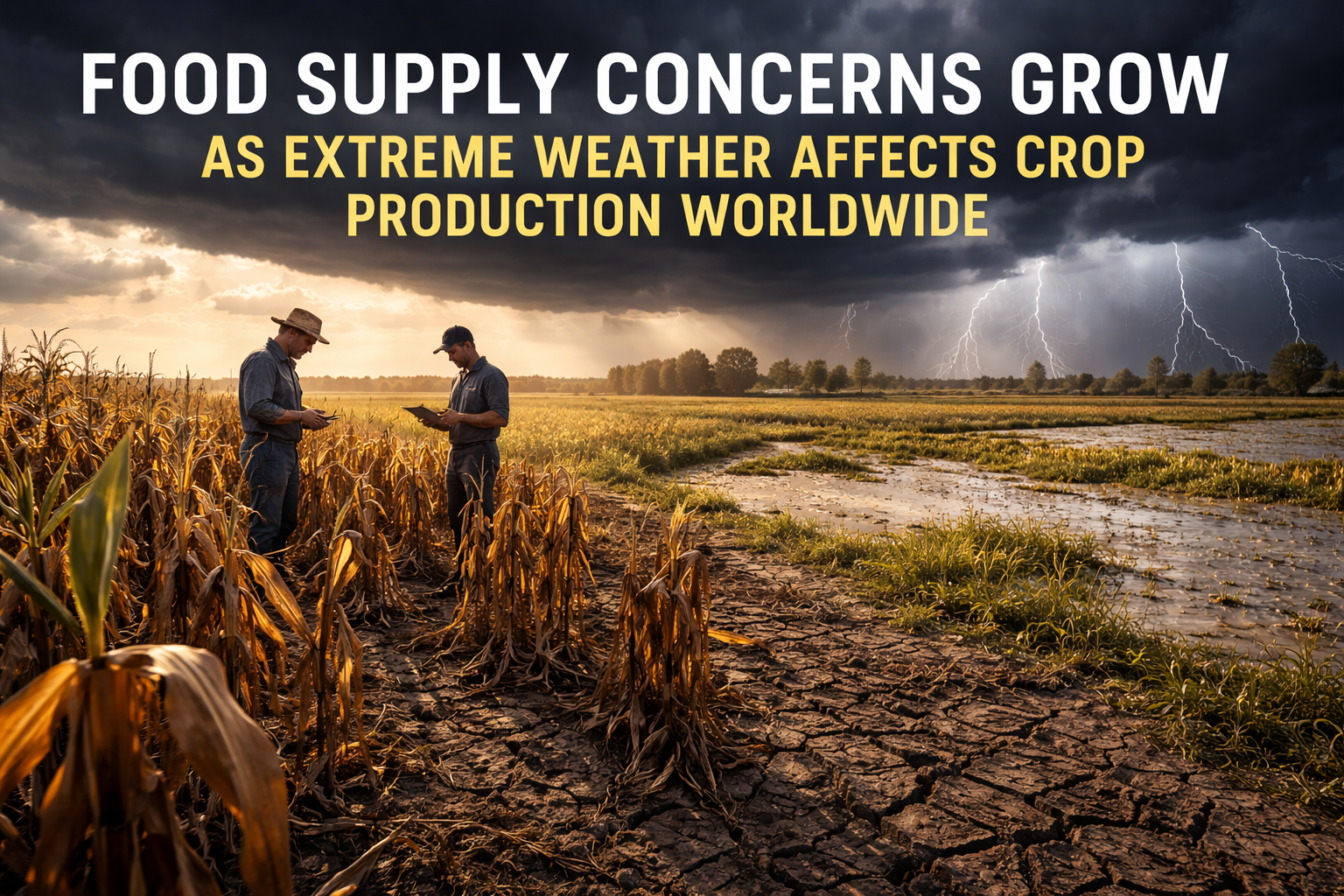
Growing concerns about global food security are emerging as extreme weather events continue to disrupt crop production across several regions of the world. Agricultural experts warn that prolonged droughts, unexpected floods, and heatwaves are significantly affecting the cultivation of key crops such as wheat, rice, and maize.
Farmers in many countries have reported reduced harvests due to irregular rainfall patterns and rising temperatures. In some regions, heavy storms and flooding have damaged farmland and irrigation systems, while other areas are struggling with severe drought conditions that threaten crop yields.
Climate scientists say that increasing climate variability is making agricultural planning more difficult for farmers. Unpredictable weather patterns are not only impacting crop growth but also increasing the risk of pests and plant diseases, which can further reduce production.
Global organizations monitoring food supply chains have cautioned that disruptions in crop production may lead to higher food prices and increased pressure on food-importing nations. Developing countries, in particular, could face challenges in ensuring stable food availability for their populations.
Governments and international agencies are now calling for stronger investment in climate-resilient agriculture, improved irrigation systems, and advanced farming technologies. Experts believe that adopting sustainable farming practices and strengthening global cooperation will be critical to protecting food supplies in the face of changing climate conditions.
Despite the challenges, researchers remain hopeful that innovations in agricultural science, crop genetics, and climate forecasting will help farmers adapt to the growing threats posed by extreme weather.News as Reported.