

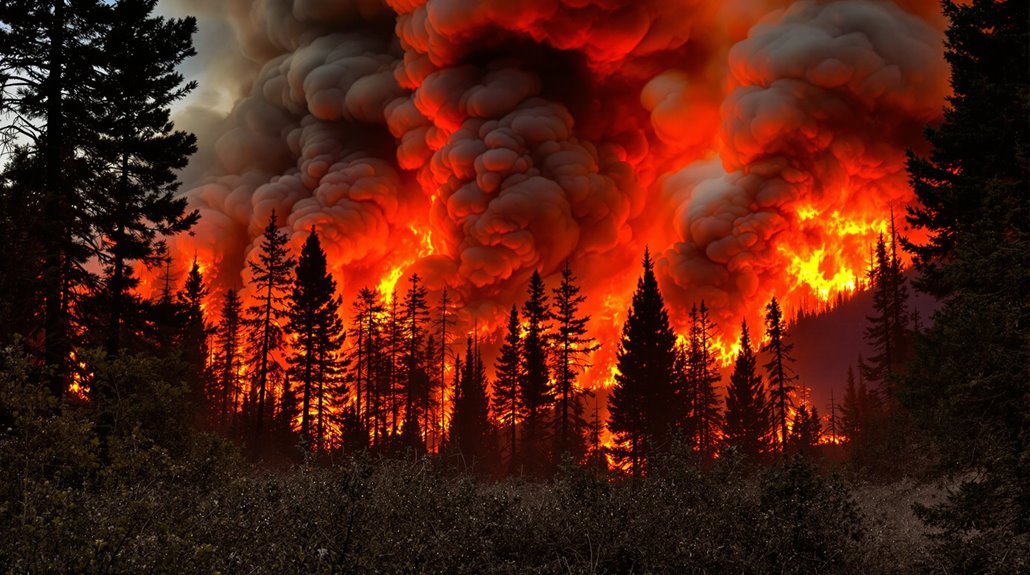
Wildfires are spreading rapidly across several forest regions worldwide as prolonged dry conditions and rising temperatures create ideal environments for fire outbreaks. Recent reports indicate that extreme heat, low rainfall, and strong winds are accelerating the intensity and spread of fires, raising serious environmental and safety concerns.
In multiple regions, including parts of the United States, wildfires have already burned vast areas early in the season, with some incidents forcing evacuations and threatening nearby communities. Experts note that unusually dry vegetation, combined with gusty winds, allows fires to spread quickly and become difficult to control.
Scientists highlight that climate change is a major factor behind these worsening conditions. Rising global temperatures are increasing the frequency of hot and dry weather, drying out forests and turning them into highly flammable landscapes.
In India, early 2026 data shows a sharp rise in forest fire incidents, with occurrences increasing by more than 80% compared to the past decade, signaling a worrying trend.
The impacts of these wildfires are far-reaching. Beyond destroying forests and wildlife habitats, they contribute to air pollution, release large amounts of carbon dioxide, and further accelerate global warming. Globally, forest fires now burn more than twice as much tree cover as they did two decades ago.
As fire seasons grow longer and more intense, experts stress the urgent need for better forest management, early warning systems, and stronger climate action to reduce the risk and protect vulnerable ecosystems. News as reported
