

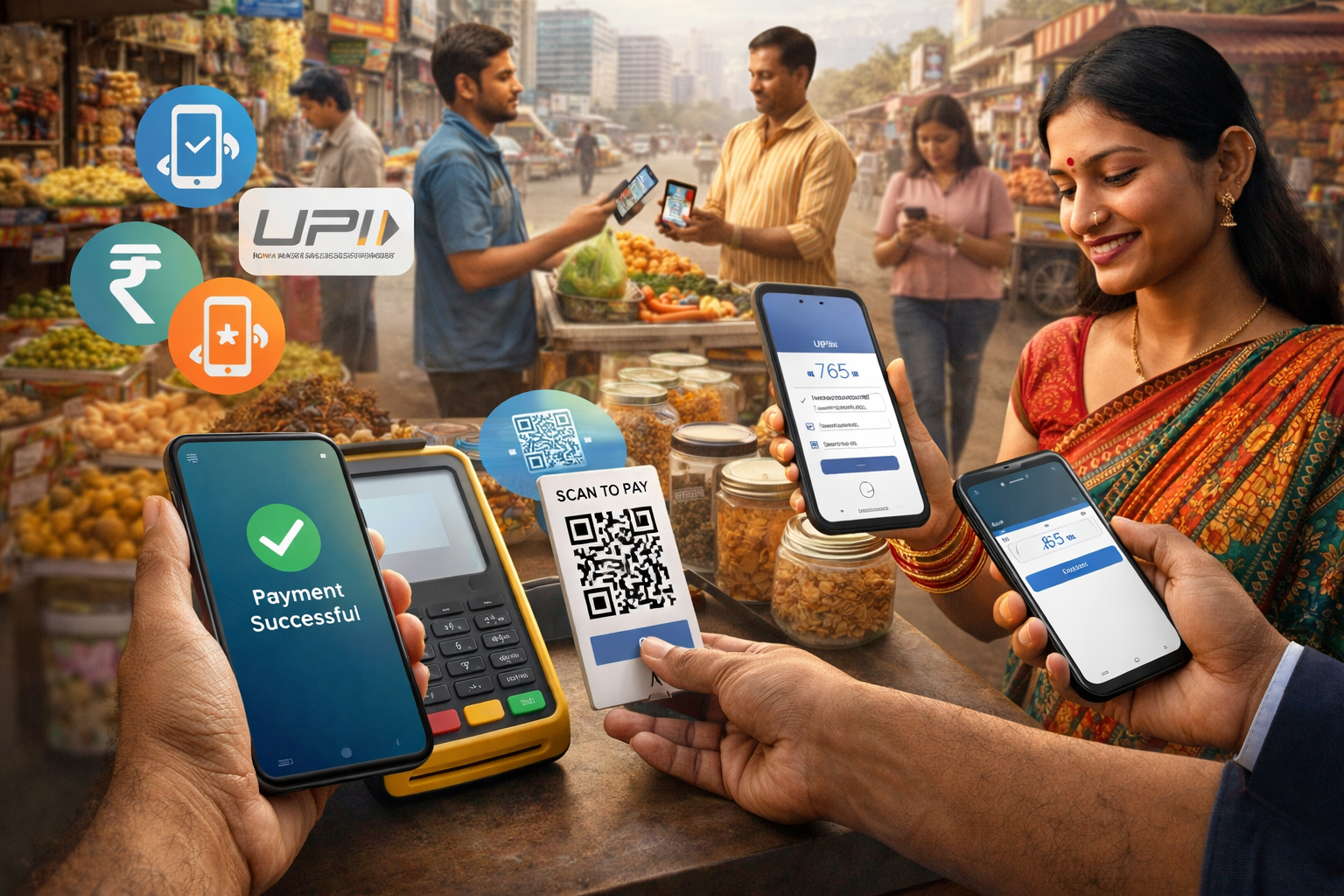
India has achieved a significant milestone as digital payment transactions reached a new record high, reinforcing the country’s rapid shift toward a cashless economy. Driven by the widespread adoption of mobile payment platforms, unified payment systems, and increased internet penetration, digital transactions have become an integral part of daily financial activities for millions of citizens.
The surge in transactions is largely attributed to the growing popularity of user-friendly platforms such as UPI-based applications, mobile wallets, and online banking services. From small vendors and local shops to large businesses, digital payments are now widely accepted, making transactions faster, more secure, and more convenient. Government initiatives promoting financial inclusion and digital literacy have also played a crucial role in accelerating this transformation.
Experts highlight that the rise in digital payments is not only improving transparency in financial systems but also reducing dependency on cash, thereby lowering operational costs and minimizing risks associated with physical currency handling. The integration of advanced technologies such as artificial intelligence and real-time payment tracking has further enhanced security and user trust.
In rural areas, increased smartphone usage and improved internet connectivity have enabled more people to participate in the digital economy, bridging the gap between urban and rural financial access. Small businesses, in particular, are benefiting from seamless transactions and better record-keeping.
As digital payment adoption continues to grow, India is positioning itself as a global leader in financial technology innovation, paving the way for a more inclusive, efficient, and transparent economic ecosystem news as reported.


- upgraderz.aws@gmail.com
- upgraderz.aws@gmail.com
- upgraderz.aws@gmail.com
- upgraderz.aws@gmail.com