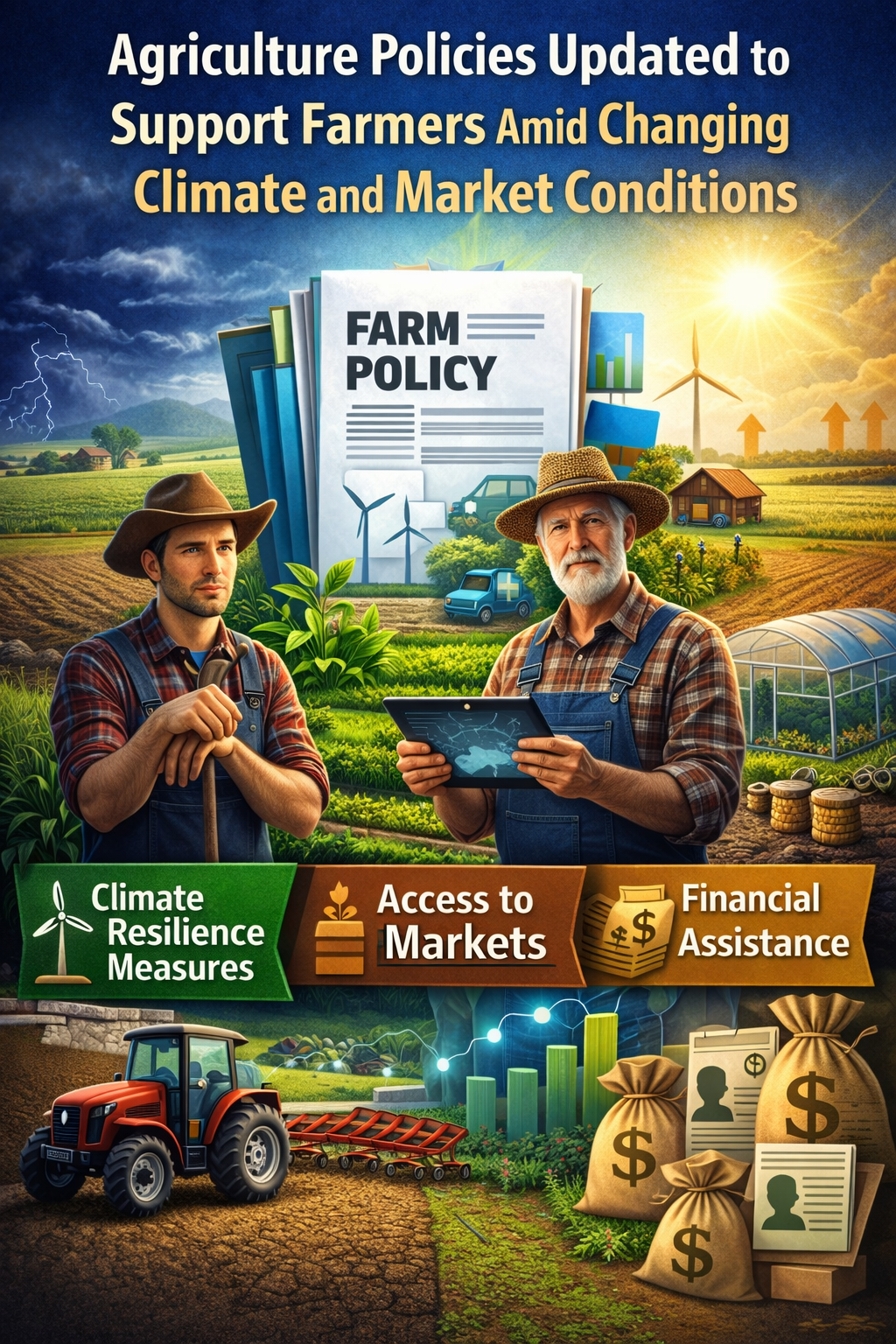
Governments are introducing updated agriculture policies to better support farmers as they face increasing challenges from climate change and evolving market conditions. With unpredictable weather patterns, rising input costs, and fluctuating crop prices, farmers require stronger policy frameworks to ensure stability and sustainability in the agricultural sector. These new measures aim to enhance resilience, improve productivity, and secure livelihoods across rural communities.
A major focus of the updated policies is climate adaptation. Initiatives such as promoting drought-resistant crop varieties, improving irrigation infrastructure, and encouraging sustainable farming practices are being prioritized. Governments are also investing in advanced technologies like precision agriculture, weather forecasting tools, and digital platforms that help farmers make informed decisions and reduce risks associated with climate variability.
In addition to environmental challenges, market-related issues are also being addressed. Policies are being designed to provide better price support, streamline supply chains, and expand access to domestic and international markets. Strengthening farmer-producer organizations and cooperatives is another key strategy, enabling small-scale farmers to gain better bargaining power and access to resources.
Financial assistance programs, including subsidies, crop insurance, and low-interest loans, are being expanded to ease the burden on farmers. Training and awareness programs are also being implemented to educate farmers about modern techniques and government schemes.
Overall, these updated agriculture policies aim to create a more resilient, inclusive, and sustainable farming ecosystem, ensuring long-term growth and food security in the face of changing global conditions news as reported.