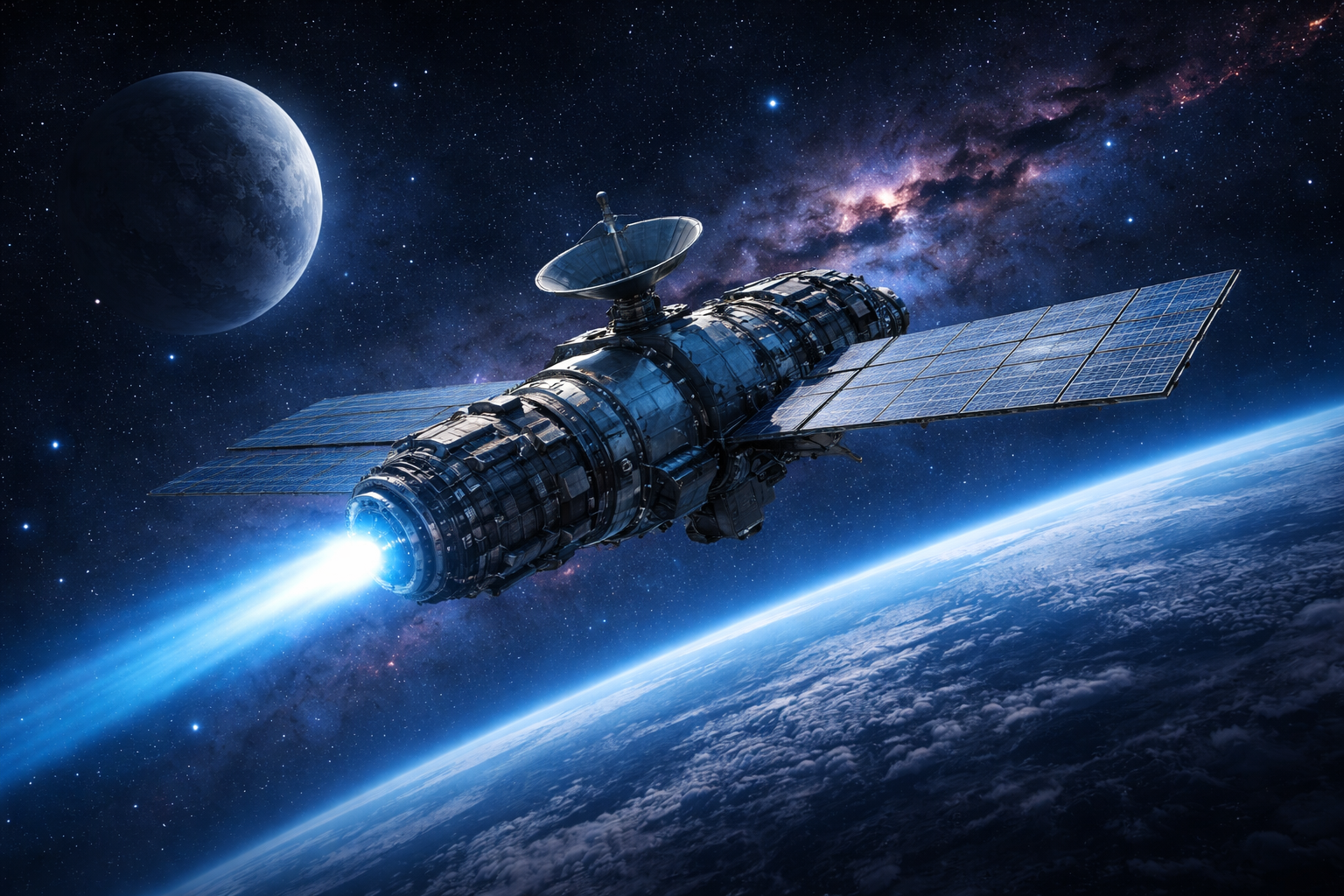
Scientists have reached an important breakthrough in space exploration after successfully completing a deep-space technology test designed to support future interplanetary missions and long-distance space travel.
The experiment, conducted by an international team of researchers and engineers, tested advanced navigation, communication, and propulsion systems in conditions similar to those found in deep space. The successful results demonstrate that the technology can operate reliably far beyond Earth’s orbit, marking a major step forward for upcoming exploration missions.
Researchers explained that the test focused on improving spacecraft autonomy and long-distance communication capabilities. These systems allow spacecraft to perform complex operations and transmit data across vast distances, where signals can take minutes or even hours to reach Earth.
The mission also evaluated innovative propulsion techniques intended to make deep-space travel faster and more energy-efficient. According to scientists, these advancements could significantly reduce travel time for future missions to distant destinations such as asteroids, outer planets, and potentially Mars.
Space agencies and research institutions involved in the project said the milestone highlights the growing collaboration in global space exploration efforts. The data collected from the test will help engineers refine spacecraft designs and prepare for more ambitious missions in the coming years.
Experts believe the success of this deep-space technology demonstration brings humanity one step closer to sustained exploration of the solar system and could play a crucial role in future scientific discoveries beyond Earth. News as Reported.