

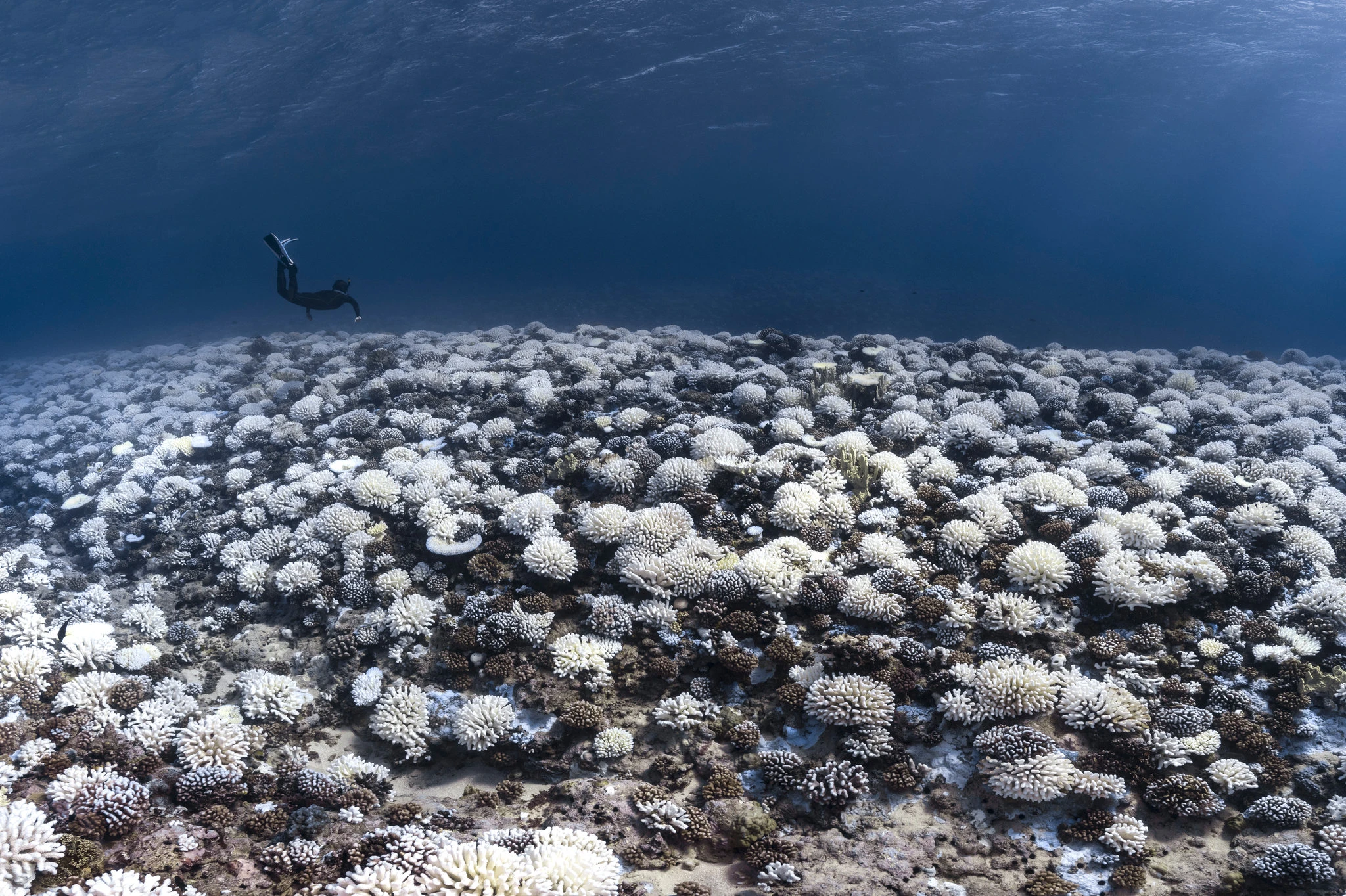
Increasing ocean temperatures are raising serious concerns among scientists about the future of coral reefs and marine biodiversity worldwide. As global warming intensifies, oceans absorb a significant portion of the excess heat, leading to higher sea temperatures that disrupt delicate marine ecosystems.
Coral reefs, often referred to as the “rainforests of the sea,” are particularly vulnerable. Elevated temperatures cause coral bleaching—a stress response in which corals expel the symbiotic algae that provide them with color and essential nutrients. Without these algae, corals weaken and may eventually die if conditions do not improve.
The loss of coral reefs has far-reaching consequences. These ecosystems support nearly 25% of all marine species, providing food, shelter, and breeding grounds. Their decline threatens fish populations, impacting both biodiversity and the livelihoods of millions of people who depend on fishing and tourism.
Marine scientists warn that prolonged heatwaves in oceans, combined with pollution and overfishing, could accelerate reef degradation. Urgent global action to reduce greenhouse gas emissions and protect marine habitats is seen as critical to preserving these ecosystems.
As climate change continues to warm the oceans, experts stress that immediate conservation efforts are necessary to prevent irreversible damage to coral reefs and the vast array of life they support. News as reported

- upgraderz.aws@gmail.com
- upgraderz.aws@gmail.com
- upgraderz.aws@gmail.com
- upgraderz.aws@gmail.com