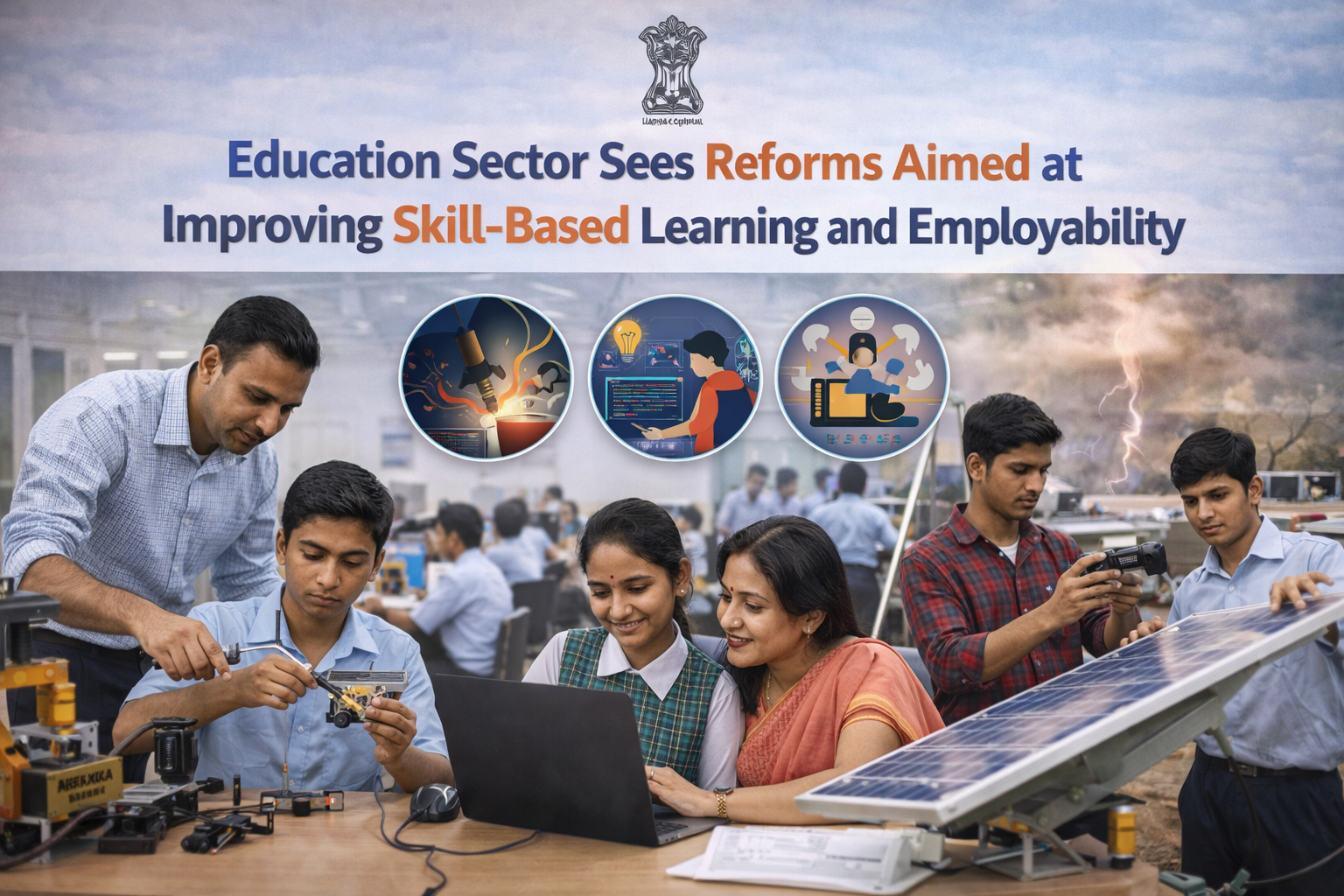
The education sector in India is undergoing significant reforms focused on enhancing skill-based learning and improving employability among students. Guided by frameworks like the National Education Policy 2020, these changes aim to bridge the gap between academic knowledge and industry requirements.
A key focus of the reforms is the integration of vocational training and practical skill development into mainstream education. Schools and colleges are increasingly adopting hands-on learning approaches, internships, and industry collaborations to equip students with real-world experience. This shift is expected to make graduates more job-ready and adaptable to evolving market demands.
The reforms also emphasize digital learning, critical thinking, and problem-solving skills. With the rise of technology-driven industries, institutions are incorporating subjects such as coding, artificial intelligence, and entrepreneurship into their curricula. Online learning platforms and digital tools are further expanding access to quality education, especially in remote and underserved regions.
Another major aspect is the promotion of multidisciplinary education, allowing students to explore diverse fields and develop a broader skill set. The introduction of flexible course structures and continuous assessment methods aims to reduce rote learning and encourage creativity and innovation.
These initiatives are expected to strengthen India’s workforce by producing skilled professionals aligned with industry needs. By focusing on practical knowledge and employability, the reforms are paving the way for a more dynamic and future-ready education system, ultimately contributing to economic growth and global competitiveness news reported.