

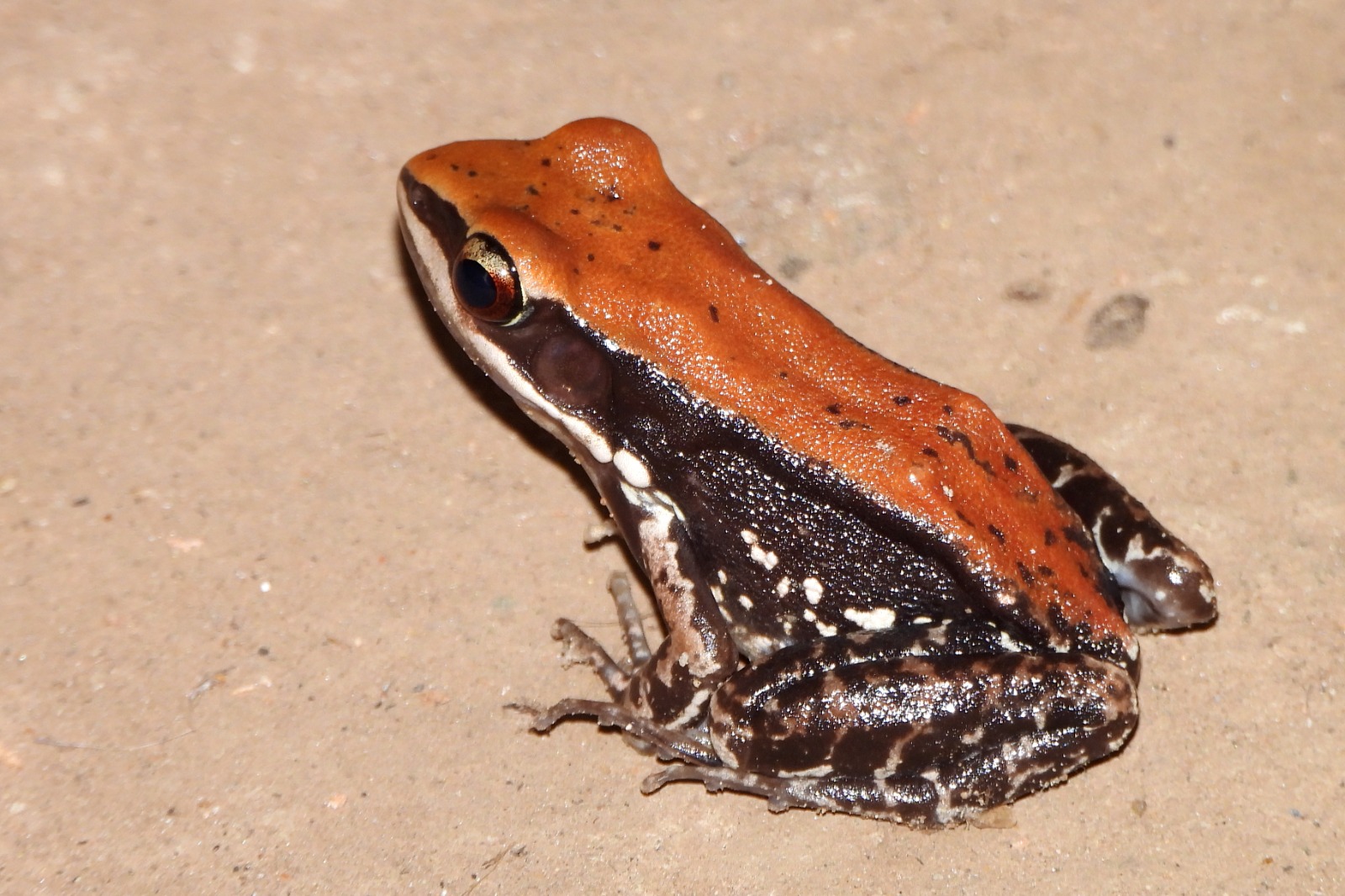
A little-known amphibian from India’s Western Ghats, Hydrophylax malabaricus, commonly called the Fungoid Frog or Malabar Hills Frog, is drawing renewed attention from scientists and conservationists alike. First documented in 1838 by Swiss naturalist Johann Jakob von Tschudi, this species belongs to the Ranidae family and is found exclusively in the biodiverse Western Ghats region.
For decades, the frog played a quiet yet significant ecological role by naturally controlling mosquito populations, helping to maintain balance in its habitat. However, recent observations suggest a sharp decline in its numbers, primarily due to rapid habitat destruction, deforestation, and environmental changes across the region.
What makes the situation more alarming is the frog’s potential contribution to modern medicine. Researchers have discovered that its skin secretes a peptide known as “urumin,” which has shown promising results in laboratory experiments. Studies conducted on mice indicate that urumin is effective in combating influenza viruses, opening new possibilities for antiviral drug development. Scientists believe that further research could lead to breakthroughs in treating viral infections in humans.
Apart from its medicinal value, the frog has unique defense mechanisms. When threatened, it emits a strong, unpleasant odor to deter predators, allowing it to escape danger. Such distinct traits underline the ecological and biological importance of the species.
Despite its significance, Hydrophylax malabaricus is now facing the risk of extinction. Experts warn that continued habitat loss, pollution, and climate change could soon wipe out this species entirely. Conservationists are urging immediate action, including habitat protection and awareness initiatives, to prevent its disappearance.
The potential loss of this frog is not just an environmental concern but also a scientific setback. Preserving it could mean safeguarding a valuable natural resource that might hold the key to future medical advancements. News as reported
CONTRIBUTION BY VINCENT MASH — EDITOR OF PHOTOWIDE MAGAZINE AND ASSOCIATE EDITOR OF PHOTO TRACK MAGAZINE
