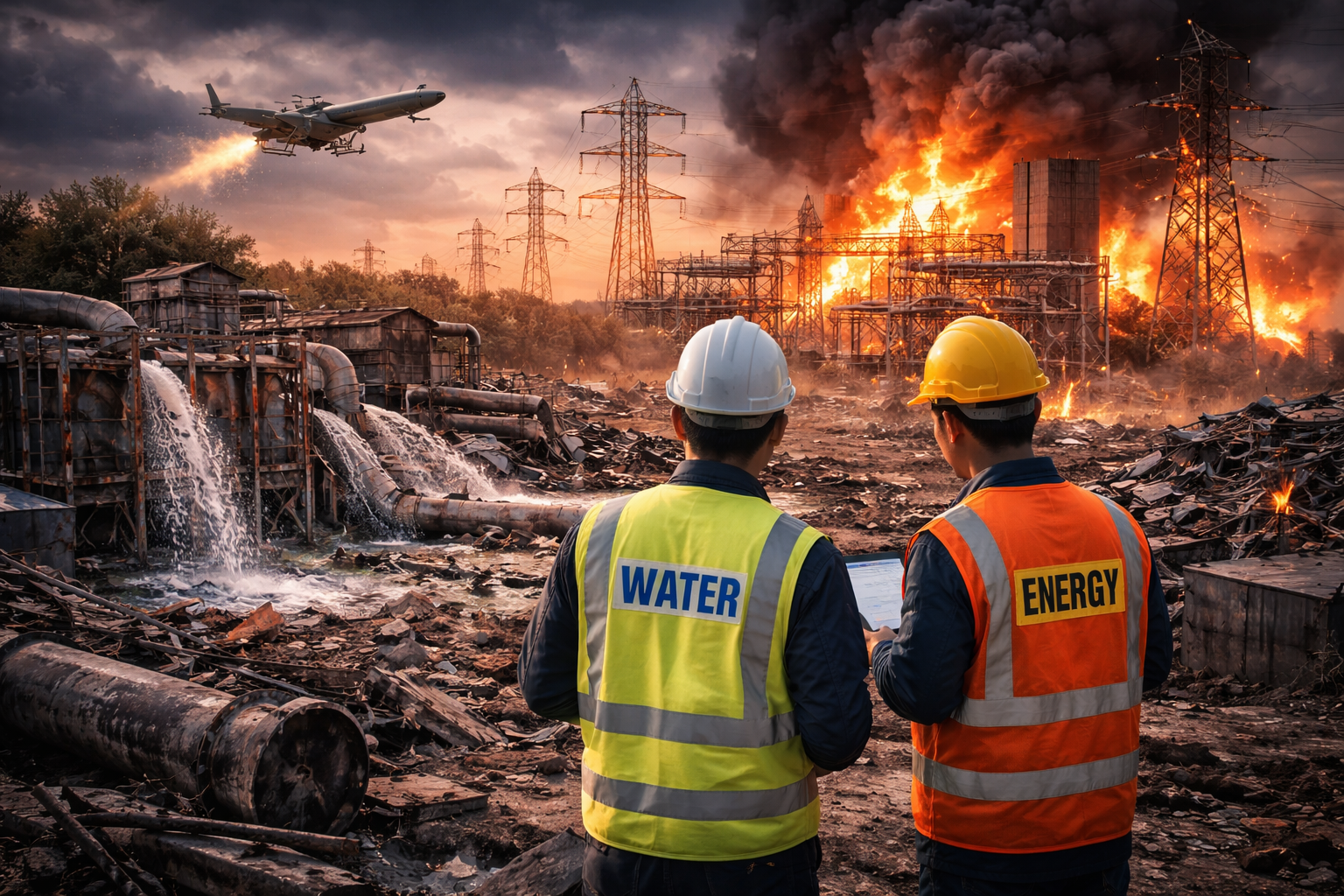
International attention is increasingly turning toward the protection of critical infrastructure in war-affected regions, as vital systems such as water supply and energy networks face growing risks from attacks.
Recent conflicts have highlighted how essential services—including power plants, pipelines, and water treatment facilities—are becoming frequent targets, causing widespread disruption to civilian life. Damage to these systems can lead to prolonged blackouts, water shortages, and severe humanitarian challenges.
Organizations like the United Nations and the International Committee of the Red Cross have raised concerns, urging all parties involved in conflicts to respect international humanitarian law and avoid targeting civilian infrastructure.
Experts warn that attacks on water and energy systems not only affect immediate survival needs but also have long-term consequences on public health, economic stability, and recovery efforts in affected regions. In many cases, rebuilding such infrastructure can take years and require significant international support.
There is also growing emphasis on strengthening resilience through better design, emergency preparedness, and international cooperation to safeguard these critical systems during times of conflict. News as Reported.