

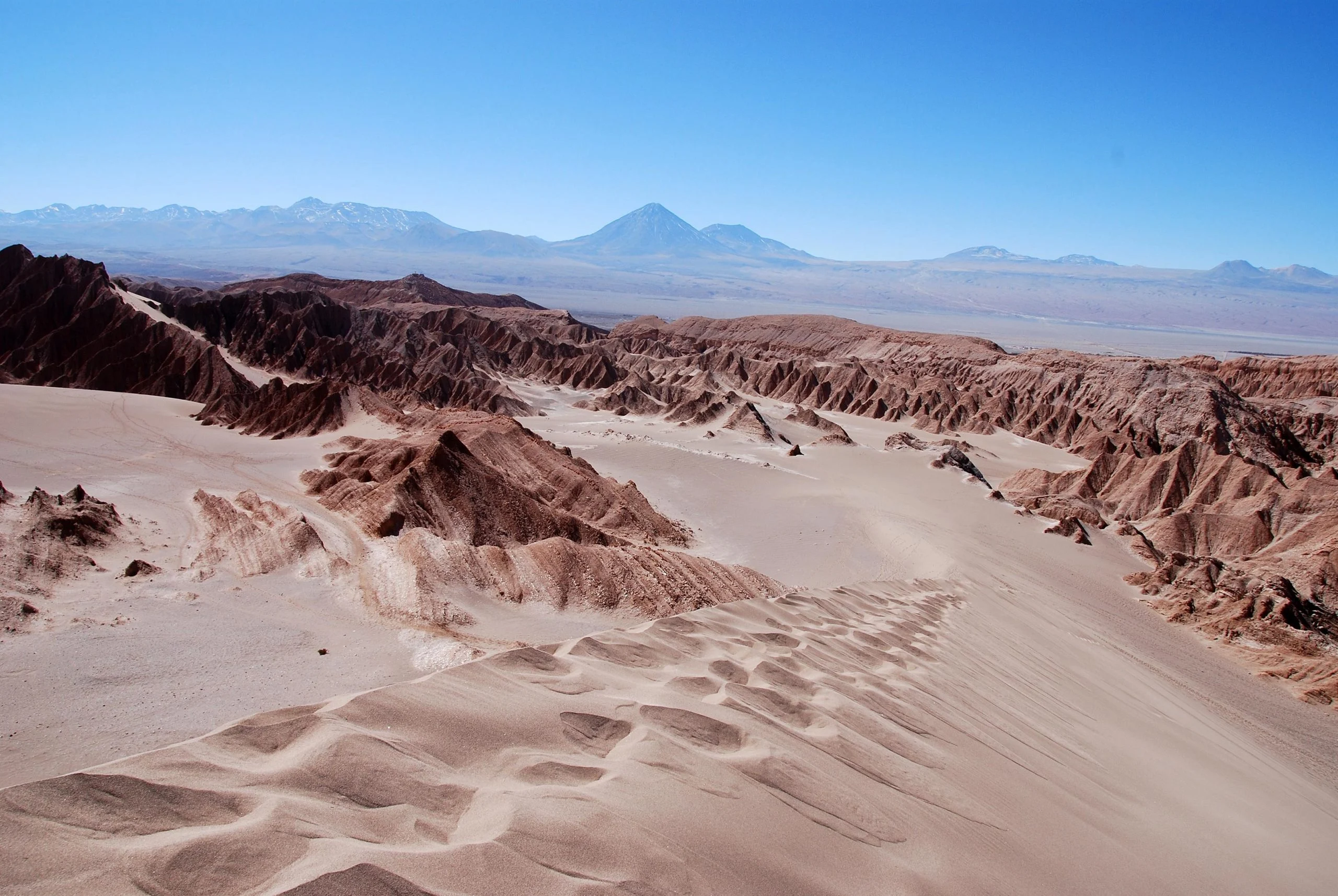
Scientists have discovered resilient microbial life forms surviving in the harsh conditions of the Atacama Desert, one of the driest places on Earth. The discovery is offering new insights into how life can adapt to extreme environments and may even help researchers understand the potential for life on other planets.
The Atacama Desert receives extremely little rainfall—some regions have gone years without measurable precipitation. Despite these harsh conditions, researchers found specialized microorganisms living within salt-rich soils and beneath thin layers of rock. These microbes are known as extremophiles, organisms capable of surviving in environments with very limited water, intense ultraviolet radiation, and high salinity.
Scientists say these microbes have evolved unique survival strategies. Some remain dormant for long periods until rare moisture appears from fog or minimal rainfall, while others draw water from the atmosphere through salt crystals. These adaptations allow them to survive in conditions previously believed to be nearly lifeless.
The discovery has attracted the attention of astrobiologists studying the possibility of life on planets such as Mars. The extreme dryness, radiation levels, and soil chemistry of the Atacama Desert closely resemble certain Martian environments. Because of this similarity, the desert is often used as a natural laboratory to test instruments designed for future space missions.
Researchers believe studying these microorganisms could reveal how life persists under extreme stress and help scientists design future missions to search for microbial life beyond Earth.
The findings also highlight the remarkable resilience of life on our planet, demonstrating that even the harshest environments can support microscopic ecosystems. News as reported
