

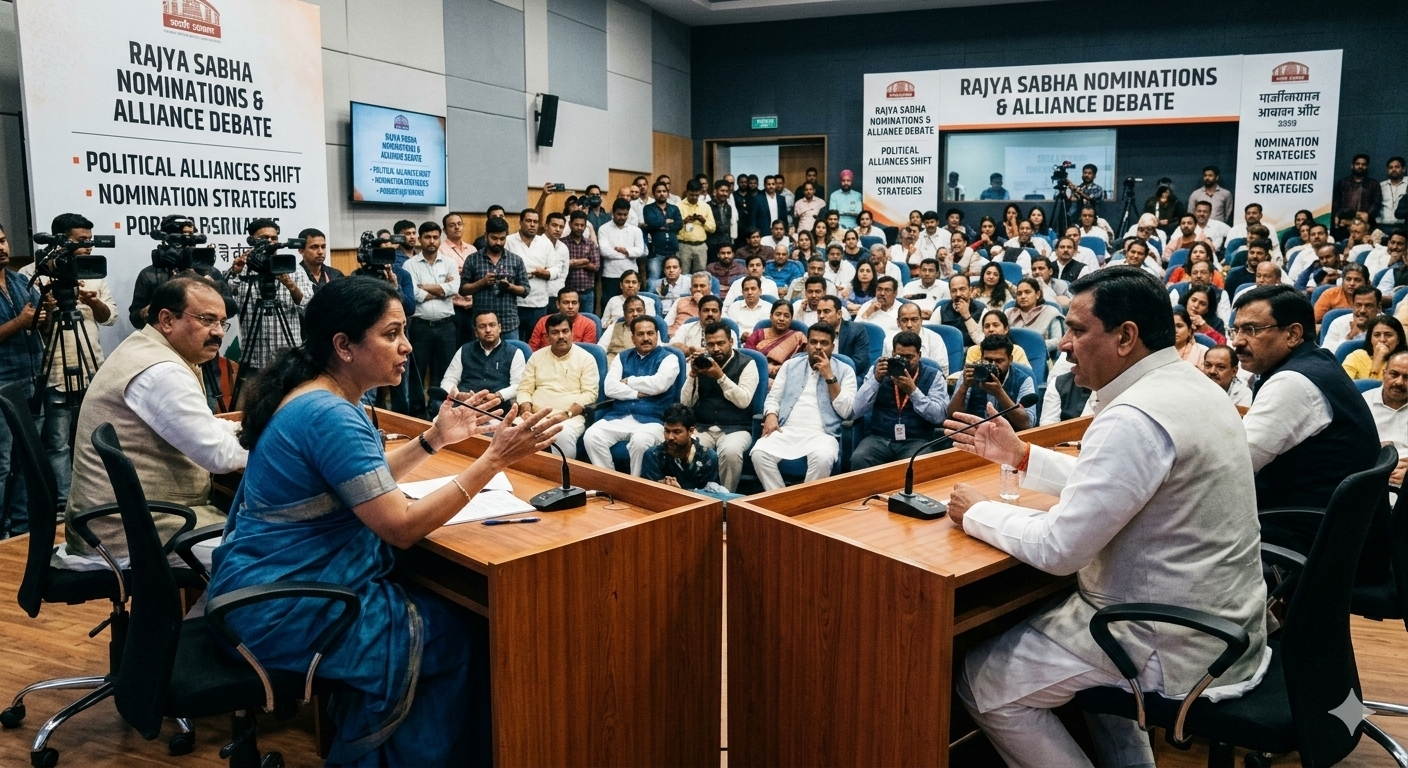
Political discussions across India have intensified as major parties prepare for the upcoming nominations to the Rajya Sabha, the upper house of the Indian Parliament. Leaders from various political parties are actively strategizing to secure key seats, with alliances and negotiations playing a crucial role in the selection process.
The nomination process for the Rajya Sabha often reflects the political balance within state legislative assemblies, as members are elected indirectly by elected representatives from different states. With several seats expected to fall vacant in the coming months, parties are evaluating potential candidates who can strengthen their presence in the upper chamber.
Senior leaders from national and regional parties have been holding meetings to finalize candidate lists while also exploring possible alliances to maximize their chances of winning the available seats. Political analysts suggest that the upcoming nominations could influence legislative dynamics in Parliament, particularly in debates on key policy decisions and proposed reforms.
The developments have sparked public discussions about representation, political strategy, and the role of the Rajya Sabha in shaping national policies. Opposition parties are also examining ways to collaborate in order to challenge dominant political groups during the election process.
As the nomination timeline approaches, the political atmosphere continues to heat up across India. Observers believe that the outcome of these nominations could have significant implications for parliamentary proceedings, legislative debates, and the broader political landscape in the months ahead news as reported.


- upgraderz.aws@gmail.com
- upgraderz.aws@gmail.com
- upgraderz.aws@gmail.com
- upgraderz.aws@gmail.com